3rd New Eleusis Symposion “Re-Enchanting the World” – From Vision to Action

“Re-Enchanting the World”
3rd New Eleusis Symposion

25–27 September 2025 | Old Oil Mill Factory, Eleusis, Greece

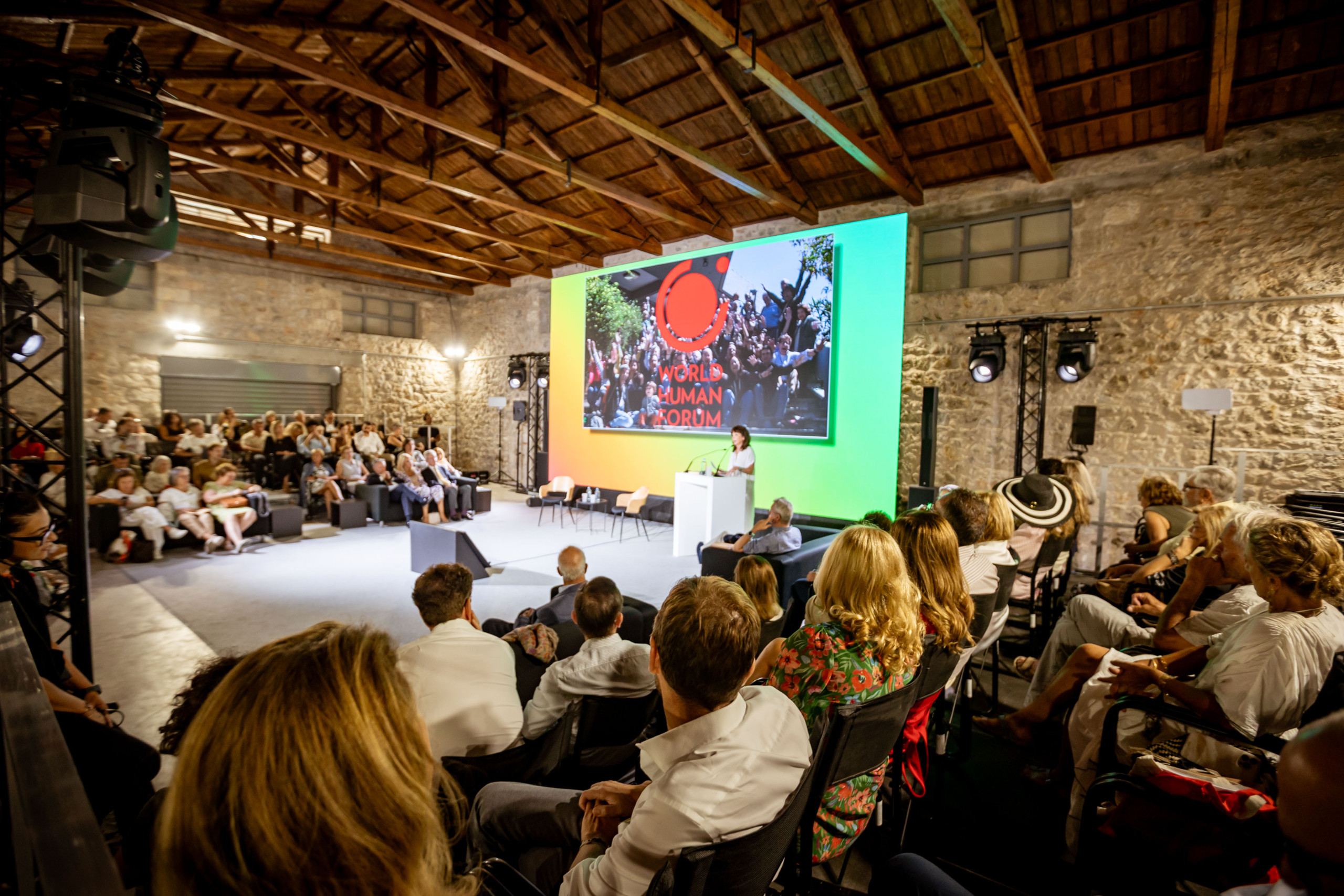
The 3rd New Eleusis Symposion came to a powerful close, leaving behind bold conversations, mind-opening talks, and a collective sense of new beginnings. With “Re-Enchanting the World” as its guiding theme, the symposion explored how ancient wisdom, art, science, and collective imagination can help us restore meaning, connection, and care in our lives and societies.

55 speakers, 16 panel sessions and keynotes, 4 workshops, 4 artistic events, 3 days — one thought-provoking gathering. From September 25–27, 2025, the historic Old Oil Mill Factory in Eleusis hosted what was described by Alexandra Mitsotaki, co-founder and president of the World Human Forum, as “not a conference, but a gathering of like-minded people.” A gathering of thought leaders, artists, scientists, and engaged citizens from around the world — all united by the belief that such meetings should lead from vision to action. From grassroots citizen initiatives to renowned academics, celebrated artists to leading scientists, local organisations of Elefsina to global educational programmes from India and Africa — the Symposion bridged ideas and action.

We returned to the land of the Eleusinian Mysteries — where transformation and self-knowledge were once cultivated — to co-create a contemporary narrative of unity, reconnection, and hope. The Symposion offered not only a space for deep reflection, but also planted the seed of an idea: to seek recognition of the Eleusinian Mysteries as part of UNESCO’s Cultural Heritage of Humanity.

3rd New Eleusis Symposion: Themes and Speakers

Topics explored at the 3rd New Eleusis Symposion included:

  • The future of Eleusis
  • The arts for healing
  • New approaches to the economy through impact investment, the circular economy, and nature-inspired systems
  • Re-enchanting neighbourhoods through meaningful, bottom-up initiatives
  • Reframing our relationship with food
  • Democracy as a shared vision
  • Children as humanity’s dream tank
  • Transforming work in order to re-enchant the world
  • The role of psychedelics in consciousness and healing

The impressive roster of speakers and participants included, among others:
Franz X. Vollenweider, Antonia Trichopoulou, Christina Merkouri, Hélène Landemore, Lex Paulson, Ruth DeFries, Daniel A. Barber, Maria Loizidou, Gary A. Bolles, Gina Belafonte, Emmanuel I. Stratakis, Christina Dalla, Ornella Corazza, Nicholas Yatromanolakis, Nikos Tsouchlos, Phil Cousineau, Kostis Tselenis, Stefanos Gandolfo, Jehangir Mehta, Maria Loi, Spyros Doukakis, Marlis Petersen, Pavlos Kavouras, and many others.

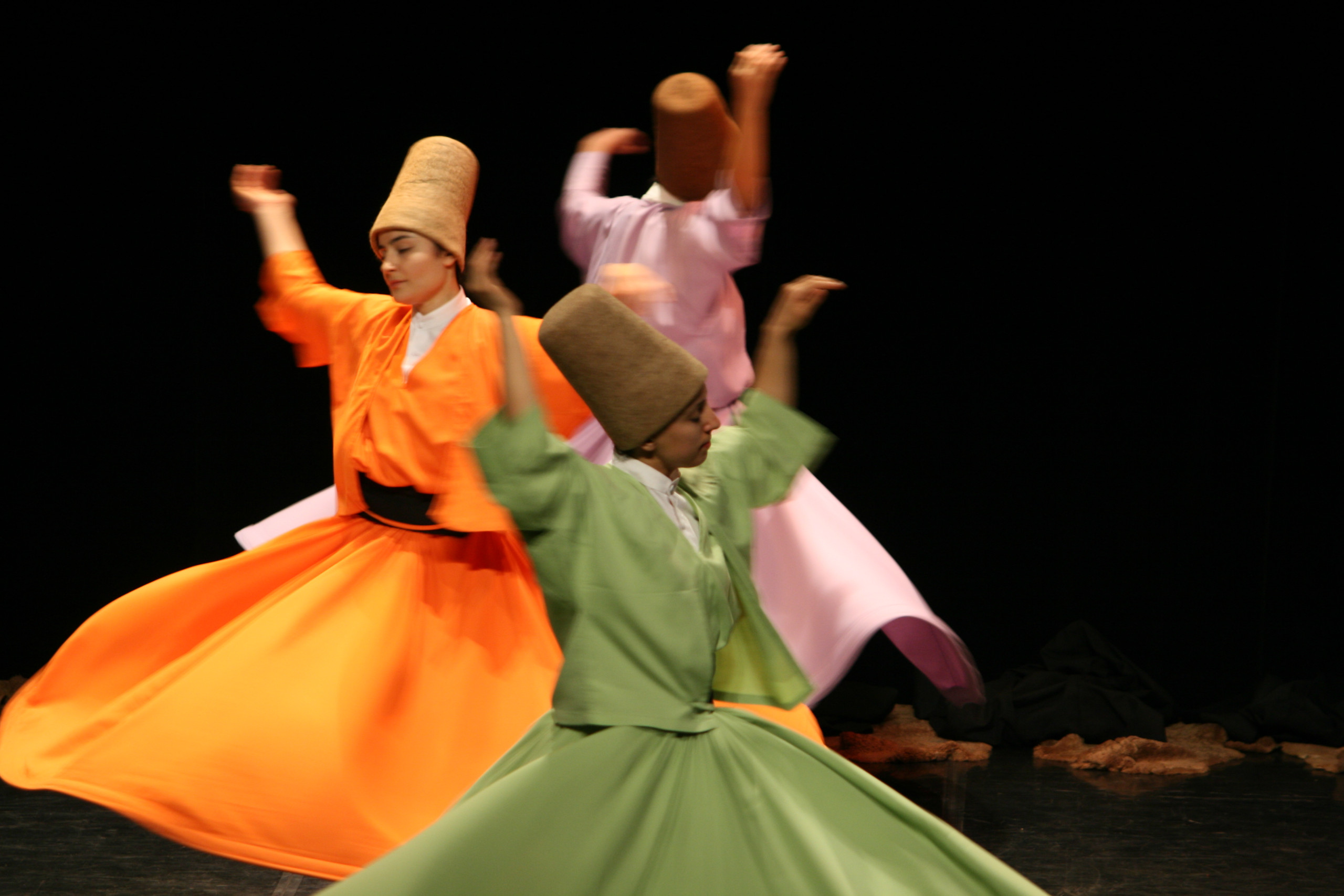
The artistic events of the Symposion have been met with great acclaim, notably the sold-out performance Sacred Paths – From the Mysteries of Eleusis to Byzantine Chant and the Mevlevi Dervish Tradition at the archaeological site of Eleusis. This unique production, featuring the Whirling Dervishes of Istanbul, the Byzantine Choir of the Association of the Constantinopolitan Friends of Music in Athens, Sokratis Sinopoulos, master of the lyra, and acclaimed director Michail Marmarinos as narrator, captivated audiences both at Eleusis and later at Megaron – The Athens Concert Hall, where it also earned warm applause.

Towards a Promising Future for Elefsina

An important idea was introduced during the closing session of the Symposion. Alexandra Mitsotaki emphasised the need for strong partnerships to support the city’s next chapter. Drawing on an idea by Professor Emeritus Pavlos Kavouras of the National and Kapodistrian University of Athens, she proposed exploring the recognition of the Eleusinian Mysteries as part of UNESCO’s Cultural Heritage of Humanity.

Earlier in the Symposion, Christina Merkouri, Director at the Ephorate of Antiquities of West Attica, explored the historical, mythological, and cultural dimensions of the Eleusinian Mysteries, highlighting their contemporary relevance. As she put it: “The Eleusinian Mysteries represent humanity’s most enduring attempt to address fundamental questions of existence through ritual, community and direct spiritual experience. Their success in transforming individual consciousness while building social cohesion offers valuable insights for contemporary efforts to address psychological distress, environmental crisis, and social fragmentation”.

Representing the Region of Attica and Governor Nikos Hardalias, Deputy Governor Christina Kefalogianni expressed the Region’s support for this proposal and outlined a broader vision for cultural regeneration and touristic reevaluation of Attica.

On the Road to the 4th New Eleusis Symposion

With a commitment to keeping the dialogue and action going, the 4th New Eleusis Symposion will return on 24–26 September 2026 with the theme: “Science, Art & the Spirit of Healing”. Until then, let us carry forward the spirit of Re-enchantment. The World Human Forum will continue its presence in Elefsina with events throughout the year.

With Gratitude to Our Sponsors and Partners

The symposion was organised by the World Human Forum, with the support of the Region of Attica, 2023 Eleusis European Capital of Culture and the Ephorate of Antiquities of West Attica, and in collaboration with the Municipality of Eleusis.

A heartfelt thanks to our sponsors and partners for their invaluable support in making the 3rd New Eleusis Symposion a reality.

Main Sponsor
Piraeus Port Authority / P.P.P. SA – COSCO SHIPPING

Sponsors
National Bank of Greece, Huawei, ELPEN Pharmaceutical Co. Inc., Qualco Group, Bank of Greece, HELLENiQ PETROLEUM, EYDAP, Vernicos Scafi Tugs & Salvage

Supported by
Region of Attica, 2023 Eleusis European Capital of Culture, Ephorate of Antiquities of West Attica

In collaboration with
Municipality of Eleusis

Special Sessions
Re-enchanting the Economy – Inspired by Nature held in collaboration with the Athens Columbia Global Center
Re-enchanting Democracy organised in collaboration with the Athens Democracy Forum

Special Support
IVI© Model supported by the Helidoni Foundation
The Fire Forest offering organised with the support of MIA Art Collection

Official Airline Partner
Aegean Airlines

Media Sponsors
ERT, Kosmos 93.6, Second Programme 103.7, Third Programme 90.9

Special Thanks
Rtdeco Event Services, View Master Events, Dipnosofistirion Catering

Performance Co-production
Sacred Paths, presented at Megaron – The Athens Concert Hall, in co-production with Megaron – The Athens Concert Hall

About the World Human Forum

The World Human Forum is a think-and-do tank, a knowledge and action hub that seeks to contribute to the creation of a genuine ecological civilisation. With Delphi as its anchor and symbolic point of reference, it draws inspiration from iconic locations (Eleusis, Delos, Ancient Olympia, Aristotle’s Lyceum) and connects pioneering forces around the world, working towards a new narrative for humanity. Its methodology is embodied in the Delphic Cube, a holistic approach grounded in the values of sustainability and regeneration, democracy, education, inner transformation, science and technology, and art.


The videos of the Symposion’s sessions will soon be available on the World Human Forum YouTube Channel.
For more details, visit:
https://eleusis.worldhumanforum.earth/

Sacred Paths From the Mysteries of Eleusis to Byzantine Chant and the Mevlevi Dervish tradition

A spiritual journey
at the Archaeological Site of Eleusis on 27 September 2025
&
at Megaron – The Athens Concert Hall on 29 September 2025

Two great sacred musical traditions meet on 27 September 2025 at the Archaeological Site of Eleusis, against the backdrop of the ecstatic whirling of the Mevlevi Dervishes.
The Whirling Dervishes of Istanbul and the Byzantine Choir of the Association of the Constantinopolitan Friends of Music in Athens, following their sold-out performance at the Philharmonie de Paris, bring together their voices and movement in an evening of spiritual convergence, marking the culmination of the 3rd New Eleusis Symposion – “Re-enchanting the World.”

This exceptional event also features Sokratis Sinopoulos, master of the lyra, and acclaimed director Michail Marmarinos as narrator.

A rare meeting between sacred traditions: one Christian, dating back to the 4th century Byzantine Empire; the other, shaped by the mystical Mevlevi order, founded in the 12th century by the great teacher Mevlana Jalal ad-Din Rûmî.

In the land of the ancient Mysteries, this encounter becomes ritual—a spiritual journey that evokes timeless questions of the soul, the sacred, and our shared human paths. Through the dervishes’ whirling and the deep harmonies of Byzantine chant, Sacred Paths offers a moving exploration of sound and silence, presence and memory—a celebration of the enduring spiritual heritage that continues to connect East and West, past and future.

Archaeological Site of Eleusis – 27 September 2025, 20:00

Ticket bookings:  https://www.ticketservices.gr/event/Sacred-Paths/?lang=en

Megaron – The Athens Concert Hall (Christos Lambrakis Hall) – 29 September 2025, 20:30

Ticket bookings: https://www.megaron.gr/event/iera-monopatia/

The “Sacred Paths” Creative Team

The Whirling Dervishes of Istanbul
Ensemble Director: Mete Edman
Musicians:
Mete Edman (oud & vocals), Emre Isik (ney), Mustafa Dedeoglu (qanun)
Kaan Sezerler (kemence), Rifat Caliskan (bendir)

Dancers:
Pinar Yatarkalkmaz, Deniz Evren Gügüs, Gökhan Denkel, Erdinç Mustafa Kızılöz, Gökhan Demir

Artistic Director: Kenan Öztürk
Production Manager: Ekim Öztürk
Management: CaféTurc Music & Arts

Choir of the Association of the Constantinopolitan Friends of Music in Athens
Choir Director: Kallistratos Kofopoulos
Chanting Ensemble:
Stamatios-Nikolaos Kissas, Evangelos Kissas, Nikolaos Tyrovolis, Efstathios Anats, Spyridon Papakostopoulos, Charalambos Stefanidis, Christos Kontakinos, Dimitrios Lagouros, Christos Piperos, Loukas Prokopiou, Efstratios Lagoumidis, and others.

Lyra: Sokratis Sinopoulos
Narration: Michail Marmarinos
Artistic Advisory: Jochen Sandig

About the Performers

The Whirling Dervishes of Istanbul

The music and dance ensemble Derviches Tourneurs d’Istanbul was founded in 2006 and has since performed at some of the most iconic venues worldwide, including the Philharmonie de Paris, the Fez Festival of Sacred Music in Morocco, the Palais de Chaillot in Paris, and the Ancient Theatre of Halicarnassus in Turkey.

Led by Mete Edman, the ensemble comprises both men and women who have embraced Turkish Sufism as a spiritual path. They accompany the Whirling Dervishes in an authentic ceremony, set to the hymns of great Sufi composers.

The Whirling Dervishes, members of the Mevlevi Order founded by disciples of Mevlana Jalal ad-Din Rûmî in the 12th century, embody a mystical tradition rooted in medieval Islam. Their philosophy, influenced by Rûmî and his master, Shams al-Dîn Tabrîzî —a heterodox Ismaili spiritual guide—advocates the quest for the Absolute through music and art.

A danced ritual, the sema unites the dancer with the sacred in a mystical ecstasy. The ney (flute) —a symbol of the soul seeking the Beloved— accompanies the ceremony along with other traditional instruments, creating a captivating and spiritual atmosphere. The ceremony’s name itself means “spiritual listening” and symbolises cosmic motion. With the right hand turned to the sky and the left to the earth, the dervish becomes the intermediary of divine grace. His attire is rich in symbolism: the sikke (hat) symbolises the tombstone of the ego, the white robe (tennure) the shroud, and the black cloak the grave. Before beginning to whirl, the dervish crosses his arms over his chest—a gesture evoking divine unity.

Association of the Constantinopolitan Friends of Music in Athens

The Association of the Constantinopolitan Friends of Music in Athens was founded in 1985 by members of the Byzantine Choir of Constantinopolitans, which had been active in Athens since 1975. It brings together experienced chanters and talented young musicians. The Association aims to continue the legacy of the historic Musical Friends’ Society of Pera, itself the successor of the renowned Musical Society of the Phanar, which flourished from the 19th century until the Asia Minor Catastrophe. Since 2023, the Choir has been under the direction of Kallistratos Kofopoulos.

The Association has made several visits to Istanbul for ecclesiastical events and has also given concerts in Paris, Bulgaria, London, Cardiff, and Cyprus. In 2016, it participated as a choir at the Holy and Great Council of Crete, by official invitation of Ecumenical Patriarch Bartholomew. In November 2021, it took part in the Jubilee of the Ecumenical Patriarch, held at the Megaron – The Athens Concert Hall.

To date, the Association has released around 30 cassette tapes and CDs, all distinguished by their fidelity to the Constantinopolitan chanting tradition.

Sokratis Sinopoulos

Sokratis Sinopoulos was born in Athens. He studied classical guitar with Maria Galani and Vassilis Gratsounas, music theory with Michalis Adamis, and Byzantine music and folk song with Yannis Tsiamoulis. In 1988, he began studying Constantinopolitan lyra and laouto with Ross Daly, and one year later, became a member of Daly’s ensemble Labyrinth.

Since then, he has collaborated with musicians from Greece and abroad across a wide range of ensembles, participating in recordings and performances around the world. He has recorded for Blue Note with Charles Lloyd, Harmonia Mundi with Jean-Guihen Queyras, ECM Records with Eleni Karaindrou, and Fuga Libera with the early music group L’Achéron.

In 1999, he was awarded the State Prize for Young Artists: Melina Mercouri, by the Greek Ministry of Culture.

In 2010, he founded the Sokratis Sinopoulos Quartet. Their debut album, Eight Winds, was produced by Manfred Eicher and released by ECM Records in 2015, receiving international acclaim. In 2018, his album Under the Rose Tree – Tunes from the Greek Musical Traditions was released by Saphrane Records, and was selected among the best CDs of the year by the German Music Critics’ Association. In 2019, the Quartet released its second album, Metamodal.

Sokratis Sinopoulos is currently a Professor at the Department of Music Science and Art at the University of Macedonia.

Michail Marmarinos

Michail Marmarinos was born in Athens and studied neurobiology, theatre, and theatre directing. In 1983–84, he founded the theatre group “Diploos Eros, Theatre Company”, which was later renamed Theseum Ensemble. His productions have been staged in Greece (National Theatre, National Theatre of Northern Greece, Onassis Stegi, Athens and Epidaurus Festival, among others) and have travelled to festivals internationally (in Austria, Belgium, Venezuela, France, Germany, Georgia, Switzerland, Japan, Spain, Italy, China, Korea, the Netherlands, Poland, Russia, Serbia).

He has participated in international co-productions with artists such as Albrecht Hirche, Heiner Goebbels, Daniel Wetzel and Helgard Haug (Rimini Protokoll), VeenFabriek and Paul Koek, the NOH theatre and Gensho Umewaka. As an actor, he has also appeared in numerous theatre productions and films by renowned Greek directors.

He served as General Artistic Director of 2023 Eleusis – European Capital of Culture and is now the new Artistic Director of the Athens Epidaurus Festival.

He is a member of the International Heiner Müller Society and the International Institute for Bioenergetic Analysis. From 2006 to 2009, he served as President of the Hellenic Centre of the International Theatre Institute. He has taught at the universities of Patras, Nafplio, and Thessaloniki—where, from 2006, he held the position of full professor.

He has received the Mikhail Tumanishvili Award in Tbilisi, Georgia, and has been named a Knight of the Order of Arts and Letters (Chevalier de l’Ordre des Arts et des Lettres) by the French Ministry of Culture.

Jochen Sandig

Jochen Sandig was born in Esslingen, Germany. In 1990 he moved to Berlin to study psychology and philosophy. Following the founding of the Tacheles Art Centre in 1990, in 1993, together with Sasha Waltz, he founded Sasha Waltz & Guests.

In 1996 he cofounded Sophiensæle, an independent venue for dance and theatre productions in BerlinMitte, which he directed until 1999. From 2000 to 2004 Jochen was a member of the artistic direction at the Schaubühne am Lehniner Platz. Since 2004 he is the director of the independent Sasha Waltz & Guests GmbH. In 2006, together with Folkert Uhde, he founded the Radialsystem in Berlin.

In 2010 he was awarded the French cultural order “Chevalier dans l’Ordre des Arts et des Lettres”. In February 2012, he debuted as director with “Human Requiem”, a staging of Johannes Brahms’ “Ein Deutsches Requiem” in cooperation with the Rundfunkchor in Berlin and Simon Halsey. Since its premiere the production travelled to Hamburg, Amsterdam, Paris, Granada, Rotterdam, Athens, Hong-Kong, Adelaide and New York. The production was awarded with the “Classical Next Innovation Award 2016”.

As a social and political activist he became one of the three co-founders of the World Human Forum in Delphi, Greece. From 2019 to 2024, Jochen Sandig was artistic and executive director of the Ludwigsburger Schlossfestspiele / Internationale Festspiele Baden-Württemberg. In the year 2022 Jochen Sandig was awarded the Cross of Merit of the Federal Republic of Germany.

3rd New Eleusis Symposion – “Re-enchanting the World”

The performance takes place within the framework of the 3rd New Eleusis Symposion, a three-day event of reflection, inspired dialogue, and visionary action at the Old Olive Mill Factory of Eleusina, from 25 to 27 September 2025. Under the title “Re-enchanting the World” and with themes relating to art, science, economy, work, communities, and democracy, it focuses on how we can restore our relationship with life, nature, others, and ourselves, paving the way towards a new eco-civilisation.

The Symposion is organised by the World Human Forum, with the support of the Region of Attica and Eleusis 2023 European Capital of Culture, in collaboration with the Municipality of Eleusis and the Ephorate of Antiquities of West Attica.

The 3rd New Eleusis Symposion is held with the support of:

Main Sponsor: Piraeus Port Authority / P.P.P. SA Cosco
Sponsors: National Bank of Greece, Huawei, ELPEN Pharmaceutical Co. Inc., Qualco Group
Donor: Paul and Alexandra Canellopoulos Foundation
With support from: Region of Attica, Eleusis 2023 European Capital of Culture
In collaboration with: Municipality of Eleusis, Ephorate of Antiquities of West Attica

The session Re-enchanting the Economy – Inspired by Nature is organised in collaboration with the Athens Columbia Global Center.
The session Re-enchanting Democracy is organised in collaboration with the Athens Democracy Forum.

Official Airline Partner: Aegean Airlines
Media Sponsors: ERT, Kosmos 93.6, Second Programme 103.7, Third Programme 90.9

Special thanks to: Rtdeco Event Services, View Master events

Posted on

Joyce DiDonato: Eden in Olympia – A Cinematic Ode to Planet Earth in Thessaloniki

Megaron Concert Hall of Thessaloniki, Greece
Friday, 5 September 2025, 19:00
Free admission with entry tickets. Seats will be allocated on a first-come, first-served basis.
Get your tickets here: https://www.more.com/gr-el/tickets/music/joyce-didonato-eden-in-olympia/

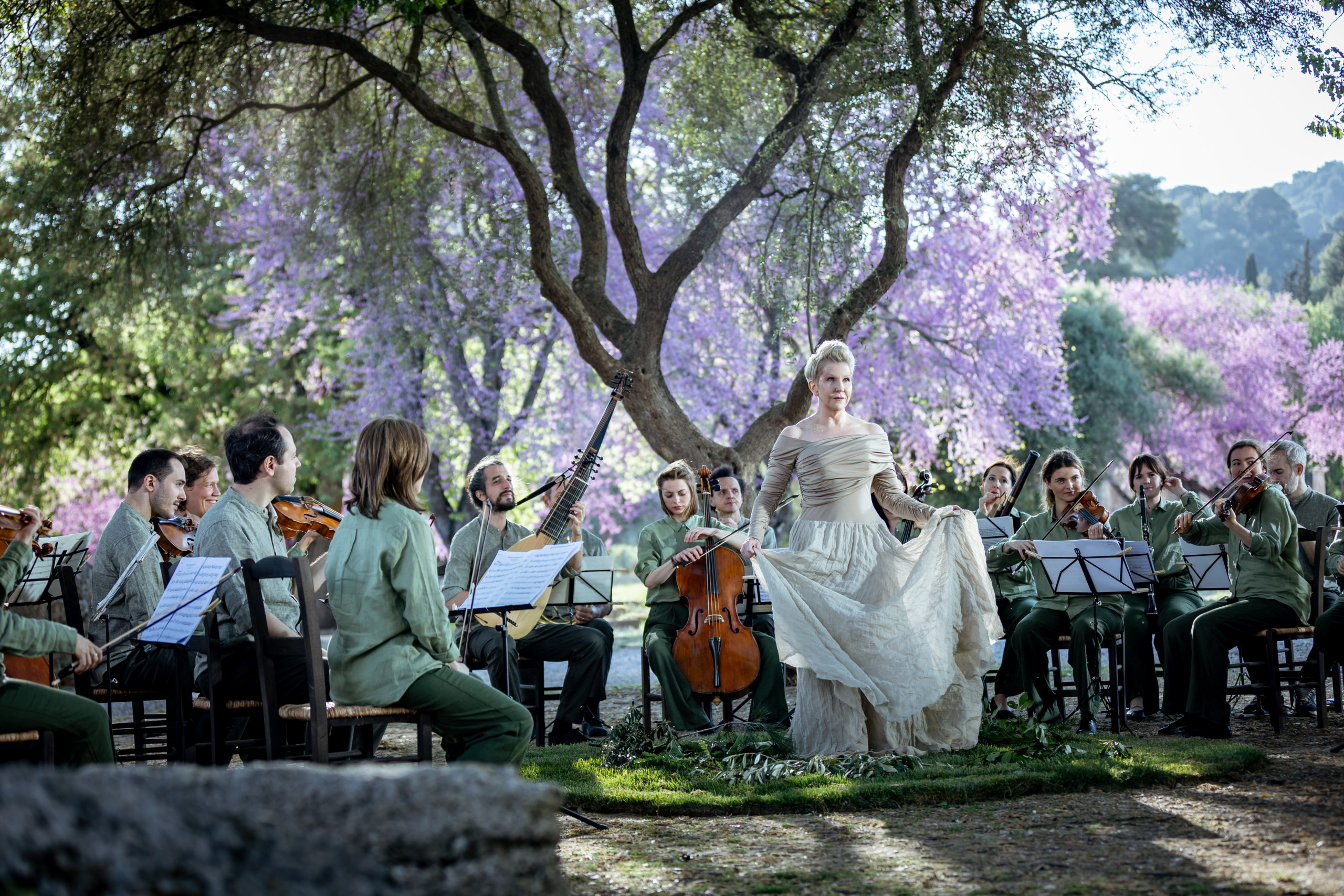
Eden in Olympia, the breathtaking film-concert featuring the world-renowned mezzo-soprano Joyce DiDonato, will be hosted at the Megaron Concert Hall of Thessaloniki on Friday 5 September 2025. Blending the timeless beauty of classical and pre-classical music with an urgent environmental message, this cinematic experience invites audiences on a powerful journey through nature’s majesty and fragility.

Eden in Olympia: from Ancient Olympia to the World

Filmed on the sacred grounds of Ancient Olympia, Eden in Olympia is more than a performance – it is a call to reconnect with the living world and reflect on our place within it. DiDonato’s transformative project “Eden”, which has captivated audiences across the globe, has found a new dimension through the lens of acclaimed director Olivier Simonnet. Featuring the ensemble Il Pomo d’Oro and children’s choirs from Greece and France – the Children’s Choir of the Greek National Opera, the Chœurs ECLATS choir, and the intercultural El Sistema Greece – the film bridges cultures, generations, and artistic expressions.

This Thessaloniki screening will culminate in a live choral performance of the project’s anthem Seeds of Hope by the Vocal Ensemble of Saints Cyril and Methodius, under the direction of Maria Meligopoulou and guest conductor Nefeli Irantou, with Giorgos Tsiligaridis on piano.

Eden in Olympia: A Powerful Message on Environmental Protection

At a time when the world faces unprecedented ecological challenges – with wildfires ravaging more than 10,000 square kilometres across the EU since the beginning of 2025 – Eden in Olympia reminds us that the Earth transcends borders. This year, at the Thessaloniki International Fair (HELEXPO) – marking 100 years since its founding – no single country is being honoured. It is therefore an opportunity to pay tribute to the entire planet and to reflect on the fact that we are all inhabitants of this pale blue dot. Protecting life on our planet is a responsibility that belongs to us all.

Driven by the vision of the World Human Forum, and in collaboration with ZDF, ARTE, Megaron Athens Concert Hall, and UNITEL, the film seeks to:
• Raise awareness about biodiversity and our interdependence with nature.
• Make classical music and opera accessible to all, regardless of background or familiarity.
• Offer a deeply immersive experience of Ancient Olympia, allowing audiences to feel the cultural heartbeat of ancient Greece in a wholly new way.

Following its world premiere in Athens and global presentations, the film continues its mission: to inspire awe, reflection, and collective action.

Organised by: WORLD HUMAN FORUM in collaboration with Megaron, Thessaloniki Concert Hall & with the support of HELEXPO Thessaloniki.

Watch the trailer: https://www.youtube.com/watch?v=NQsw2fEM_-0

Posted on

3rd New Eleusis Symposion: Re-Enchanting the World

“Re-Enchanting the World”3rd New Eleusis Symposion 

25–27 September 2025 | Old Oil Mill, Eleusis 

How can we reconnect with the wonder of everyday life? 

Can myth and poetry engage in dialogue with science? 

Can work become a source of meaning and connection? 

Is it possible to reimagine our neighbourhoods, food, and economy—as acts of care? 

And ultimately, what does it mean to “re-enchant the world”? 

The 3rd New Eleusis Symposion returns to the land of the celebrated Mysteries—where, for over 1,500 years, the ideas of inner transformation and initiatory knowledge were cultivated—for three days of reflection, inspired dialogue, and visionary action. From 25 to 27 September 2025, the World Human Forum welcomes pioneering speakers of diverse backgrounds, disciplines, and corners of the world to the Old Oil Mill Factory of Eleusis, creating a space for a contemporary narrative of unity and personal and social transformation. 

With the theme “Re-Enchanting the World”, this year’s symposion focuses on how we can restore our relationship with life, nature, others, and ourselves, paving the way towards a new eco-civilisation. It is a call to action, urging a transformation of our daily experiences—from an anthropocentric worldview to a planetary consciousness—through choices that nourish rather than deplete, connect rather than isolate, and honour rather than exploit. 

The symposion is organised by the World Human Forum, with the support of the Region of Attica and 2023 Eleusis European Capital of Culture, and in collaboration with the Municipality of Eleusis and the Ephorate of Antiquities of West Attica. 

The working language of the symposion is English. Simultaneous translation into Greek will be available. 

The New Eleusis Symposia: An Initiative with Roots and Vision 

The New Eleusis Symposia offer a unique platform to explore and redefine the intersection between ancient wisdom and the modern quest for meaning. Through interdisciplinary approaches, they bring together science, art, archaeology, spirituality, and social innovation. Over the course of three days, the public is invited to engage in a vibrant narrative of reconnection through experiential workshops, artistic performances, and live discussions. 

3rd New Eleusis Symposion: Themes and Speakers 

Topics to be explored at the 3rd New Eleusis Symposion include: 

  • The arts for healing 
  • Re-enchanting the economy, work, and neighbourhoods 
  • Our relationship with food 
  • Democracy as a shared vision 
  • Children as humanity’s dream tank 
  • The role of psychedelics in consciousness and healing 

The speaker and participant line-up includes, among others:
Gina Belafonte, Franz X. Vollenweider, Christina Merkouri, Christina Dalla, Ornella Corazza, Nikolaos Yatromanolakis, Nikos Tsouchlos, Chloë Goodchild, Phil Cousineau, Kostis Tselenis, Maria Loizidou, Ruth DeFries, Emmanuel I. Stratakis, Stefanos Gandolfo, Daniel A. Barber, Anis Barnat, Antonia Trichopoulou, Jehangir Mehta, Maria Loi, Hélène Landemore, Lex Paulson, Achilles Tsaltas, Spyros Doukakis, Gary Bolles, Marlis Petersen, Pavlos Kavouras, and others. 

Artistic Events 

Each day of the symposion concludes with a unique artistic experience: 

  • 25/9 | Cine Eleusis: Screening of Mystery 14: Human Requiem in Eleusis by Stephan Talneau 
  • 26/9 | Old Oil Mill Factory: Musical performance Psychelectronica by Superwave (Leonidas Danezos & Tasos Sotiriou) 
  • 27 & 28/9 | Eleusis Archaeological Site: Performance Sacred Paths – From the Mysteries of Eleusis to Byzantine Chant and the Mevlevi Dervish tradition. The Whirling Dervishes of Istanbul, the Association of the Byzantine Choir of Constantinople-Athens, Sokratis Sinopoulos, and Michael Marmarinos create a mystical experience in the iconic archaeological site. 

Sponsors and Partners 

The 3rd New Eleusis Symposion is supported by: 

Main Sponsor: Piraeus Port Authority / P.P.P. SA – COSCO SHIPPING  

Sponsors: National Bank of Greece, ELPEN Pharmaceutical Co. Inc., Qualco Group 

Donor: Paul and Alexandra Canellopoulos Foundation 

Supported by: Region of Attica, 2023 Eleusis European Capital of Culture 

In collaboration with: Municipality of Eleusis, Ephorate of Antiquities of West Attica 

The session Re-enchanting the Economy – Inspired by Nature is held in collaboration with the Athens Columbia Global Center 

The session Re-enchanting Democracy is organised in collaboration with the Athens Democracy Forum 

IVI© Model was supported by The Helidoni Foundation 

About the World Human Forum 

The World Human Forum is a think-and-do tank, a knowledge and action hub that seeks to contribute to the creation of a genuine ecological civilisation. With Delphi as its anchor and symbolic point of reference, it draws inspiration from iconic locations (Eleusis, Delos, Ancient Olympia, Aristotle’s Lyceum) and connects pioneering forces around the world, working towards a new narrative for humanity. Its methodology is embodied in the Delphic Cube, a holistic approach grounded in the values of sustainability and regeneration, democracy, education, inner transformation, science and technology, and art. 

3rd New Eleusis Symposion 

“Re-Enchanting the World” 

25–27 September 2025 

Old Oil Mill Factory, Eleusis 

Find more details, the full programme, and ticket reservations at:
https://eleusis.worldhumanforum.earth/ 

Posted on

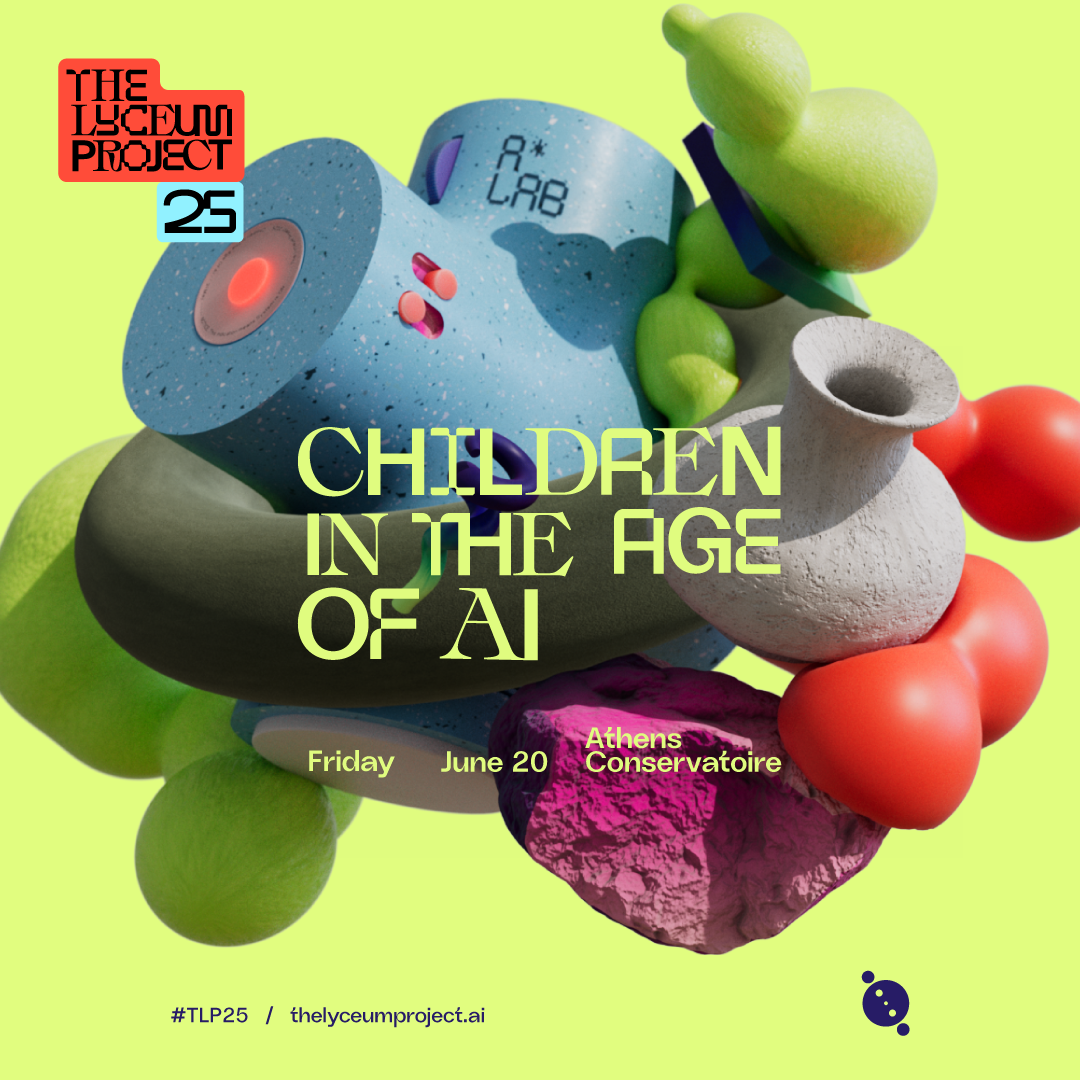
The Lyceum Project 2025: Highlights and Reflections

An initiative for a global, open, and interdisciplinary dialogue connecting Philosophy to AI 

📍 Athens Conservatoire, Greece
🗓️ Held on Friday, 20 June 2025 

A day of reflection and dialogue on a vital question: How can we empower children, tomorrow’s citizens, to flourish in the age of AI? 

On Friday, June 20, The Lyceum Project 2025, themed “Children in the Age of AI,” brought together a diverse community of distinguished thinkers, practitioners, policymakers, artists, and citizens at the Athens Conservatoire and the archaeological site of Aristotle’s Lyceum. The goal of this year’s gathering was to reflect and debate on what it means to be a child in the age of AI. 

At a time when we are learning anew what it means to live and grow alongside AI, The Lyceum Project 2025 underscored the importance of recognising children’s voices and placing them at the heart of efforts to redefine what it means to be human. Amid a lively atmosphere of exchangιng ideas, the event paved the way for rethinking the values and childhood features we must safeguard to ensure that children can flourish in a world where AI is omnipresent. 

The day unfolded with the participation of leading figures from the fields of ethics, AI, education, policymaking, and child development, featuring discussions on critical topics, keynote speeches, and a dedicated session with young researchers. Speakers explored how AI technologies can be guided with wisdom and integrity, and how all sectors influenced by AI, from governance and education to innovation, can be aligned with values that promote children’s well-being. The conversations revealed the opportunities and challenges of building an inclusive and ethical future with AI, a future that truly benefits the new generation. 

A highlight of the event was the presentation of  the “Philosophy Hub” at the archaeological site of Aristotle’s Lyceum, which is expected to be developed over the next period. The day concluded at the archaeological site of Aristotle’s Lyceum, with a site-specific artistic performance tailored to the unique character of the site. 

The Lyceum Project 2025 in detail 

The event was honoured by the presence of the Prime Minister of the Hellenic Republic, Mr Kyriakos Mitsotakis. The day began with welcoming remarks by Ms Alexandra Mitsotaki, President & Co-Founder of the World Human Forum, and Dr Georgios Nounesis, Director & Chairman of the Board of the NCSR “Demokritos”. 

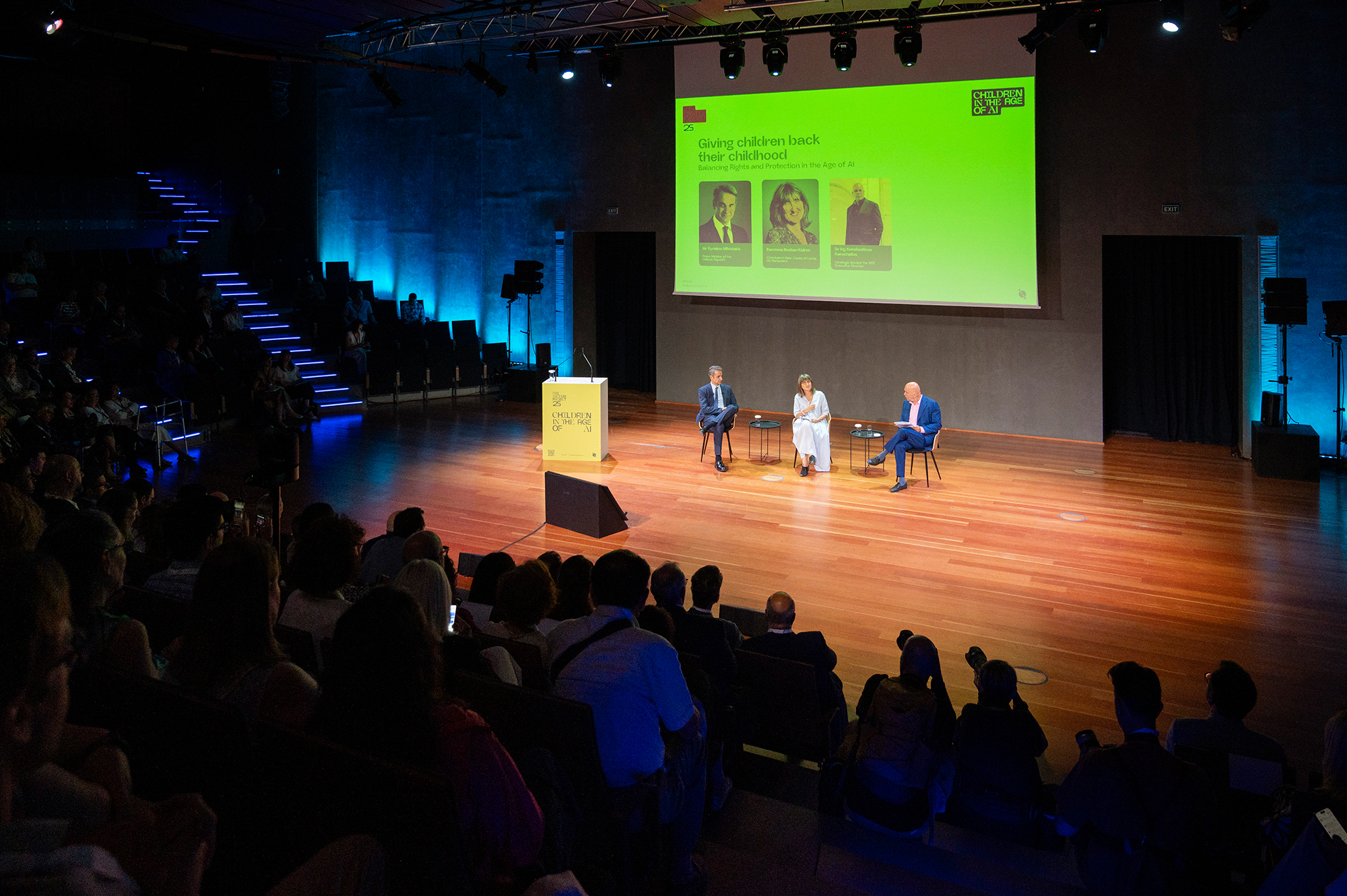
In a powerful opening dialogue, the Prime Minister and Baroness Beeban Kidron, Member of the House of Lords and Advisor to the Oxford Institute for Ethics in AI, joined moderator Dr Ing Konstantinos Karachalios to address the pressing need to balance children’s rights and protection in the age of AI. In his opening statement, the Prime Minister noted: “We need to pick our regulatory battles in a smart way […]. And for me, there are two battles I’ve decided to pick. The first is about democracy and how technology is actually interfering with the democratic debate. And the second is the protection of our kids and our teenagers.” 

Next, Ms Eugenia Bozou, Head of Government Relations and Public Policy at Google for Greece, Cyprus, and Malta, delivered a keynote address about empowering the new generation through AI. As she noted, “AI is not magic. It brings challenges, but if we face them responsibly, we have a unique opportunity to create something extraordinary.” 

The “AI Governance Panel” explored how regulation, ethical foresight, and legal responsibility must evolve to protect children in the age of AI. The panel participants were Prof Wayne Holmes (UCL), Mr Juraj Čorba (Ministry of Informatisation, Slovakia), Mr Alpesh Shah (IEEE Standards Association), and Prof Lilian Mitrou (University of the Aegean). As emerging technologies advance, the stakes affect all of humanity. “Good governance can lay the right foundations,” Mr Shah asserted. 

Ms Tanya Perelmuter (Fondation Abeona) engaged in a conversation with Dr Lida Arnellou (NCSR “Demokritos”) on the importance of citizen education about AI, with particular emphasis on the role and participation of young women. 

The “AI and Education” panel featured Prof. Zoe Gavriilidou (Democritus Univ. of Thrace), Asst Prof Spyridon Doukakis (Ionian Univ., President of the Institute of Educational Policy), Dr Giorgos Kosteletos (NKUA), Mr Christos Skarkos (Principal of the Vivlos Primary School in Naxos), and Prof Despina Karakatsani (Univ. of the Peloponnese). The discussion focused on the role of AI as a supportive tool in teaching and learning, as well as the need for education to adapt in ways that truly empower children. “In an era when technology is changing everything, we need to bring back interdisciplinarity and the connection of school subjects with everyday life”, according to Asst Prof Doukakis.  

The morning concluded with the announcement of the five winners of the nationwide school exhibition “Growing Up in a World with Artificial Intelligence”, which invited students to reflect creatively on life with AI. Fifteen student projects were showcased during the event. Dr Dora Katsamori (NCSR “Demokritos”) served as the competition’s scientific lead. Maria Papadimitriou, a renowned contemporary visual artist from Greece, chaired the selection committee. 

Dr Nicholas Prevelakis hosted the “Young Scholars’ Session”, which was held in affiliation with the Center for Hellenic Studies in Greece, Harvard University. The presentations focused on how AI impacts children’s agency, rights, and prospects in various contexts including education and governance. 

Prof Panagiotis Pantazakos (NKUA) opened the evening program with a keynote speech on the role of education in the era of anthropomorphic AI, which imitates human traits, behaviours, and forms of interaction. 

This was followed by the panel on “Age-Appropriate AI Design”. Asst Prof David Bickham (Boston Children’s Hospital), Dr Jun Zhao (Univ. of Oxford), Dr Sergio Imparato (Harvard Univ.), Ms Liz Thomas (Microsoft), and Dr Mhairi Aitken (The Alan Turing Institute) discussed how AI can be developed to meet the needs of children and their caregivers. They also emphasised the importance of strong interaction between research and innovation. As Dr Zhao noted, “We want to put children at the centre of the design process, to listen to their voices, to respect their needs”. 

In the last panel of the day, Prof John Tasioulas (Director, Institute for Ethics in AI, Univ. of Oxford) and Prof Spyridon Rangos (Univ. of Patras), in a discussion moderated by Dr Maria Dagioglou (NCSR “Demokritos”), examined key philosophical questions about the role of AI in childhood. Prof Tasioulas pointed out that digital systems built to flatter and mirror our preferences risk displacing the challenges and personal growth that arise through genuine human relationships. 

Prof. Anastasia Giannakidou, Frank J. McLoraine Professor of Linguistics at the Univ. of Chicago, summarised the key insights and themes that emerged throughout the day. 

At the end of the event, Ms Antoinette Nassopoulos-Erickson, architect and Senior Partner at Foster + Partners, Ms Alexandra Mitsotaki, and Dr Vangelis Karkaletsis, Director of the IIT at NCSR “Demokritos”, announced the creation of a new Philosophy Hub at the archaeological site of Aristotle’s Lyceum. This initiative represents an inspired partnership between NCSR “Demokritos”, the World Human Forum, and the architectural firm Foster + Partners, with support from the Region of Attica and the Ministry of Culture. 

Philosophy and AI met with art in the final act of The Lyceum Project 2025, when dance students from the Athens Conservatoire and musicians from the Contemporary Music Research Center presented the performance “The last human?” conceived specifically for the birthplace of the event’s inspiration: Aristotle’s Lyceum, the historic site of philosophical reflection. This symbolic return to the origins and roots of thought and ideas gave artistic form to the thoughts and emotions that emerged during the event, with an eye towards a more inclusive and meaningful future. 

Acknowledgements 

The Lyceum Project 2025 was organised by the National Centre for Scientific Research “Demokritos” and the World Human Forum, in collaboration with the Special Secretariat of Foresight, Presidency of the Government, Hellenic Republic and hosted by the Athens Conservatoire. It was held in affiliation with the Center for Hellenic Studies – Harvard University and the Center for Hellenic Studies at the University of Chicago, and supported by the IEEE Standards Association | IEEE SA and the Alexander S. Pissios Family Foundation. 

Main Sponsor: Google 

Official Airline Partner: AEGEAN 

Official Media Partner: Athens News Agency – Macedonian Press Agency (ANA-MPA)  

Future AI Leaders Sponsor: Hellenic Artificial Intelligence Society (EETN) 

The Ephorate of Antiquities of the City of Athens granted permission to use the archaeological site of Aristotle’s Lyceum for the evening performance held as part of The Lyceum Project 2025. 

What’s next 

The Lyceum Project will return next year to continue the global, open, and interdisciplinary dialogue connecting Philosophy to AI for human flourishing, right where it all began, next to Aristotle’s Lyceum. 

Until then, let us keep imagining and building the world we want to live in. 

Video recordings of the event sessions will soon be available on The Lyceum Project’s official YouTube channel https://www.youtube.com/@TheLyceumProject-official. 

Social Media:  

The Lyceum Project LinkedIn Page  

The Lyceum Project Facebook Page 

#TheLyceumProject #TLP25 

About The Lyceum Project 

Set in the cradle of philosophy, next to the archaeological site of Aristotle’s Lyceum, The Lyceum Project is a global initiative connecting philosophy and AI that comes alive each year on June 20. Organised by leading academic institutions, research centres, and global organisations, visionary thinkers and doers, The Lyceum Project bridges timeless philosophical wisdom with groundbreaking AI innovation. 

The Lyceum Project uncovers insights and offers pathways that guide technology toward sustaining and enriching the interconnected web of life. This modern Lyceum provides a space where philosophy, science, the arts, and humanities converge to tackle the greatest challenges of our time. 

The inaugural edition of The Lyceum Project in 2024 introduced an Aristotelian ethical framework to address AI’s challenges and opportunities, as outlined in the white paper “Lyceum Project: AI Ethics with Aristotle” by John Tasioulas, Professor of Ethics and Legal Philosophy, and Director of the Institute for Ethics in AI at the University of Oxford, and Josiah Ober, Professor of Political Science and Classics at Stanford University. This framework continues to guide the project’s vision.  

The Lyceum Project aligns with the “Statement on Inclusive and Sustainable Artificial Intelligence for People and the Planet,” signed at the Artificial Intelligence Action Summit in Paris in February 2025, to promote inclusive and multi-stakeholder dialogues and cooperation on AI governance. 

The Lyceum Project also fulfils the convening function of one of the Flagship Programmes in “Greece’s AI Transformation Blueprint” and serves as the venue for an annual high-level global meeting on AI ethics and policy.  

About the organisers 

The National Centre for Scientific Research (NCSR) “Demokritos” is Greece’s largest multidisciplinary research centre. NCSR “Demokritos” plays a key role in national and European AI initiatives through its Institute of Informatics and Telecommunications and AI research activities. 

The World Human Forum is a think-and-do tank, a knowledge and action hub designed to help build a brighter future for all. A global citizens’ initiative which highlights and interconnects the innovative forces of our planet towards the creation of a genuine ecological civilisation. 

The Special Secretariat of Foresight, under the Presidency of the Government, Hellenic Republic. 

The Athens Conservatoire (Greek: Odeion Athinon) is the oldest educational institution for the performing arts in modern Greece, founded as a non-profit organisation in 1871. Its premium location at the heart of Athens and its iconic building make it a unique and enviable cultural hub for various contemporary arts and cultural events. 

The Center for Hellenic Studies – Harvard University is dedicated to the reassertion of the humanism of the ancient world, centring on Hellenic civilisation in its widest sense. Today, it stands as a premier research facility, cultivating a repository of materials that attracts scholars, researchers, and students from all over the world.  

The Center for Hellenic Studies at the University of Chicago is a forum for research, pedagogy, and engagement with the many aspects of the Hellenic civilisation from antiquity to the modern day.  

The IEEE Standards Association SA is a leading consensus-building organisation that nurtures, develops, and advances global technologies. It facilitates standards development and standards-related solutions, such as technology incubation, alliance consortia formation and open source. 

The Alexander S. Pissios Family Foundation is a non-profit organization committed to supporting underprivileged and underserved communities both locally and globally by creating transformative opportunities in education, employment, and social services, thereby empowering individuals to thrive. 

The Lyceum Project 2025 – Children in the Age of AI

An initiative for a global, open, and interdisciplinary dialogue connecting Philosophy to AI

Friday, 20 June 2025, starts at 10:30 AM
Athens Conservatoire, Greece

How can we empower children, tomorrow’s citizens, to flourish in the age of AI? 

A new generation is raised with AI, and possibly, by AI. In a world increasingly guided by algorithms and automated decisions, we need to reflect on how children play, learn, and communicate. 

The Lyceum Project is an international, interdisciplinary gathering that takes place every year at the Athens Conservatoire, next to the archaeological site of Aristotle’s Lyceum. It is an initiative that brings together academics, practitioners, policymakers, artists, and citizens to discuss the changes, opportunities, and challenges we face in the age of AI.

This year, on June 20, The Lyceum Project places childhood and AI at the epicentre of public debate to deliberate on: What does it mean to be a child in the age of AI? How to guide technology with wisdom and integrity, ensuring AI empowers children? And how does innovation align with our highest values, shaping a future that benefits all children?

With distinguished guests in attendance – including the Prime Minister of the Hellenic Republic, Kyriakos Mitsotakis – the event will engage leading voices in ethics, AI, education, policy-making and children development. Featured speakers include:

  • John Tasioulas, Professor of Ethics and Legal Philosophy and Director of the Institute for Ethics in AI at the University of Oxford;
  • Baroness Beeban Kidron, Member of the House of Lords and advisor to Oxford’s Institute for Ethics in AI.

The event will conclude with a site-specific performance at Aristotle’s Lyceum, inspired by this year’s theme. It will feature dance students from the Athens Conservatoire and musicians from the Contemporary Music Research Centre.

The Lyceum Project 2025 is organised by the National Centre for Scientific Research “Demokritos” and the World Human Forum; in collaboration with the Special Secretariat of Foresight, Presidency of the Government, Hellenic Republic; hosted by the Athens Conservatoire; in affiliation with The Center for Hellenic Studies – Harvard University and the Center for Hellenic Studies at the University of Chicago; with the support of the IEEE Standards Association | IEEE SA and the Alexander S. Pissios Family Foundation.  

Main Sponsor: Google

Official Airline Partner: AEGEAN

Official Media Partner: Athens News Agency – Macedonian Press Agency (ANA-MPA) 

Future AI Leaders Sponsor: Hellenic Artificial Intelligence Society (EETN)

Admission is free; Registration is required. 

The event will be held in English, except for the ‘AI & Education’ panel, which will be delivered in Greek. Interpretation devices will be available to facilitate understanding in both languages. 

For more information, please visit: thelyceumproject.ai

Programme Highlights 

The event explores key themes, including: human nature and AI, AI as intelligent tools for children’s flourishing,  policy and governance. 

Morning Session | 11:00 AM – 2:15 PM

  • Giving children back their childhood: Balancing Rights and Protection in the Age of AI; Prime Minister of the Hellenic Republic, Kyriakos Mitsotakis and Baroness Beeban Kidron
  • AI Governance Panel: This panel discussion will address regulation, ethical foresight, and legal responsibilities related to children in the age of AI, offering insights from academics, policy-makers and technology governance experts on shaping future governance frameworks.
  • AI and Education Panel (in Greek): Academics, educators, and policymakers share their insights and experiences about how AI can empower teaching and learning, as well as how education can be shaped to support children, tomorrow’s citizens, in the age of AI.

Young Scholars’ session | 3:30 PM – 5:30 PM

A unique session where young scholars (PhD students or those within 7 years of their PhD), representing diverse fields (social sciences, humanities, education, computer science, AI ethics, and art), share their insights, ideas, and reflections on this year’s theme.

Evening Session | 6:30 PM – 8:45 PM

  • Age-appropriate AI Design Panel: This panel brings together academics and AI practitioners to discuss how we design safe and trustworthy AI systems that empower children. 
  • Concluding Philosophical Reflections about Children and AI: A discussion with Prof John Tasioulas and Prof Spyridon Rangos
  • Closing Remarks and Next Steps: Anastasia Giannakidou, Frank J. McLoraine Professor of Linguistics; Director, Center for Hellenic Studies at the University of Chicago.

Experiencing the spirit of the place

The day will conclude with an evening interdisciplinary performance at Aristotle’s Lyceum, inspired by the topics discussed during the day. The Athens Conservatoire dance students, collaborating with Contemporary Music Research Center musicians, will offer a vibrant close to an intellectually stimulating day. 

🗓️ Friday, 20 June 2025, starts at 10:30 AM

📍 Athens Conservatoire (Rigillis & Vasileos Georgiou B’ 17-19)
Admission is free; Registration required.

For more information, please visit: thelyceumproject.ai

Open to the public, educators, designers, researchers, policymakers, and media

Press Contacts 

Dr. Eva Steiner-Karatairi, NCSR Demokritos

📧

Ioanna Gkomouza, Communications Officer, World Human Forum

📧

🌐 thelyceumproject.ai

Social Media: 

The Lyceum Project LinkedIn Page 

The Lyceum Project Facebook Page

#TheLyceumProject #TLP25

About The Lyceum Project

Set in the cradle of philosophy, next to Aristotle’s ancient Lyceum, The Lyceum Project is a global initiative connecting philosophy and AI that comes alive each year on June 20. Organised by leading academic institutions, research centres, and global organisations, visionary thinkers and doers, The Lyceum Project bridges timeless philosophical wisdom with groundbreaking AI innovation.

The Lyceum Project uncovers insights and offers pathways that guide technology toward sustaining and enriching the interconnected web of life. This modern Lyceum provides a space where philosophy, science, the arts, and humanities converge to tackle the greatest challenges of our time.

The inaugural edition of The Lyceum Project in 2024 introduced an Aristotelian ethical framework to address AI’s challenges and opportunities, as outlined in the white paper “Lyceum Project: AI Ethics with Aristotle” by John Tasioulas, Professor of Ethics and Legal Philosophy, and Director of the Institute for Ethics in AI at the University of Oxford, and Josiah Ober, Professor of Political Science and Classics at Stanford University. This framework continues to guide the project’s vision. 

The Lyceum Project aligns with the “Statement on Inclusive and Sustainable Artificial Intelligence for People and the Planet,” signed at the Artificial Intelligence Action Summit in Paris in February 2025, to promote inclusive and multi-stakeholder dialogues and cooperation on AI governance.

The Lyceum Project also fulfils the convening function of one of the Flagship Programmes in “Greece’s AI Transformation Blueprint” and serves as the venue for an annual high-level global meeting on AI ethics and policy. 

Meet the organisers

The National Centre for Scientific Research (NCSR) “Demokritos” is Greece’s largest multidisciplinary research centre. NCSR “Demokritos” plays a key role in national and European AI initiatives through its Institute of Informatics and Telecommunications and AI research activities.

The World Human Forum is a think-and-do tank, a knowledge and action hub designed to help build a brighter future for all. A global citizens’ initiative which highlights and interconnects the innovative forces of our planet towards the creation of a genuine ecological civilisation.

The Special Secretariat of Foresight, under the Presidency of the Government, Hellenic Republic.

The Athens Conservatoire (Greek: Odeion Athinon) is the oldest educational institution for the performing arts in modern Greece, founded as a non-profit organisation in 1871. Its premium location at the heart of Athens and its iconic bauhaus building make it a unique and enviable cultural hub for various contemporary arts and cultural events.

The Center for Hellenic Studies – Harvard University is dedicated to the reassertion of the humanism of the ancient world, centring on Hellenic civilisation in its widest sense. Today, it stands as a premier research facility, cultivating a repository of materials that attracts scholars, researchers, and students from all over the world. 

The Center for Hellenic Studies at the University of Chicago is a forum for research, pedagogy, and engagement with the many aspects of the Hellenic civilisation from antiquity to the modern day. 

The IEEE Standards Association SA is a leading consensus-building organisation that nurtures, develops, and advances global technologies. It facilitates standards development and standards-related solutions, such as technology incubation, alliance consortia formation and open source.

The Alexander S. Pissios Family Foundation is a non-profit organization committed to supporting underprivileged and underserved communities both locally and globally by creating transformative opportunities in education, employment, and social services, thereby empowering individuals to thrive.

Posted on

5th ALPHA MISSION – ΔELOS Global Gathering

Human Settlements: From Ancestral Wisdom to Celestial Futures

On 26–27 May 2025, beneath the radiant Aegean sun, on the sacred island of Delos—birthplace of Apollo and Artemis, once one of the first cosmopolitan centres of the Mediterranean and now an open-air museum—the 5th ALPHA MISSION – ΔELOS Global Gathering took place. Entitled “Human Settlements: From the Earth to the Moon and Beyond”, this year’s gathering invited a global constellation of thinkers, scientists, and artists to re-imagine how we inhabit the world—and worlds beyond.

Drawing inspiration from Delos’s example as a resilient, ecologically balanced settlement that once sustained almost 30,000 people in balance with its finite resources, the gathering turned to the past to inform visions of the future. In the spirit of Apollo, long associated with light, but also worshipped as Ktistes and Archegetes—divine founder of cities—, the discussions developed around how to build wisely, responsibly, and in harmony with the worlds we inhabit.

ALPHA MISSION – ΔELOS is a World Human Forum initiative in collaboration with the Ephorate of Antiquities of the Cyclades and in partnership with the National Centre of Scientific Research “Demokritos”, the Hellenic Space Center and Europa Nostra.

Among this year’s participants —scientists, artists, theorists, educators, young pupils from the Cyclades— were distinguished speakers John Schellnhuber, Carlos Moreno, Athena Coustenis, Yannis Zouganelis, Mark Wigley, Beatriz Colomina, Daniel A. Barber, David Gissen, Dimitris Philippides, Simon Richards, NahumRomero, Catherine Gall, Thomas Doxiadis, Véronique Chankowski and others.

At the core of the gathering was a tribute to the legacy of prominent urban planner Constantinos Doxiadis and the Delos Symposia of the 1960s and 70s. These visionary assemblies convened thinkers like Buckminster Fuller, Margaret Mead, andMarshall McLuhan to explore the future of human settlements through the lens of Ekistics—the science of human habitation. Expanding the dialogue from the terrestrial to the celestial, ALPHA MISSION ΔELOS 2025 invited a new generation to imagine settlements that harmonise nature, society, and technology—wherever humanity may journey next.

As part of this year’s gathering, the World Human Forum unveiled a new sculptural installation created by the renowned sculptor Praxiteles Tzanoulinos. Centred on the themes of “Oneness, Wisdom, Life”, the installation invites the public to a space of rest and reflection. Attendees also had the opportunity to send their own personal message by posting a post card bearing stamps from the new ALPHA MISSION – ΔELOS stamp series, recently issued by Hellenic Post (ELTA).

Α sculpture was offered as a token of gratitude to professor Stamatios Krimigis, Member of the Academy of Athens and Space Department Head Emeritus at the Johns Hopkins University Applied Physics Laboratory, and Demetrios Athanasoulis, Director of the Ephorate of Antiquities of Cyclades, for their continuous support since the inception of the ALPHA MISSION – ΔELOS initiative five years ago.

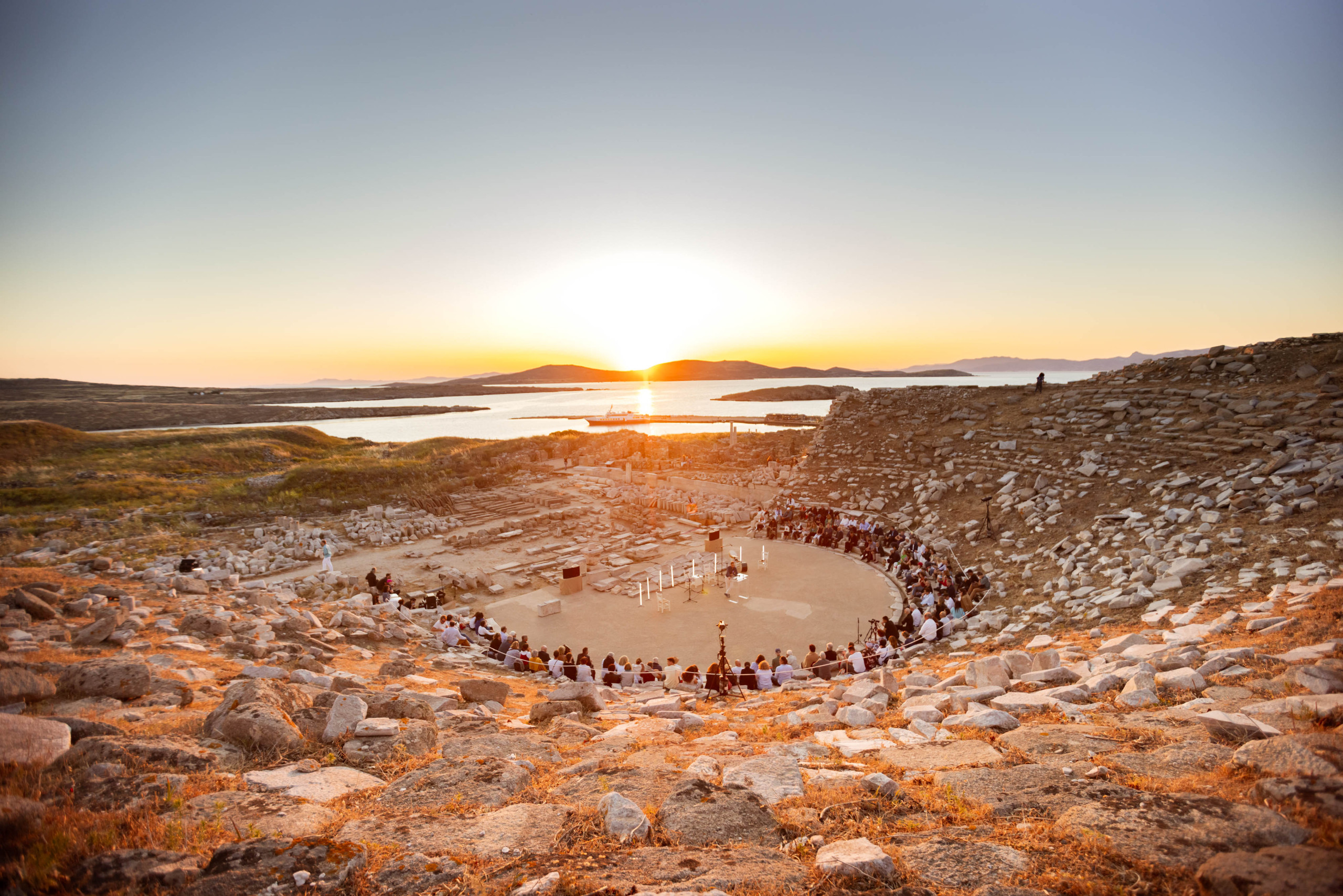
The two-day event concluded at the island’s ancient theater with “Ancient Thoughts and Cosmic Odes”. Karen ní Mheallaigh, Professor of Classical Studies at Johns Hopkins University, and Bettany Hughes, historian, author, and broadcaster, read ancient and modern accounts on Delos and outer space. They were accompanied by live performances from Diana Tishchenko (violin), Sokratis Sinopoulos (lyra), Zelişah Kızılkan (vocals, duduk), and Alexandros Rizopoulos (percussion).

Video highlights and full sessions from the gathering will soon be available on the World Human Forum YouTube channel: https://www.youtube.com/channel/UCfWWGQFW64wLUNwMbjfy0RA

Themes and Conversations: Bridging Eras and Worlds

Day One – Lessons from the Past

The gathering opened with an exploration of historical urban sustainability. Underthe moderation of Alexandra Mitsotaki, President and Co-Founder of the WorldHuman Forum, the first session, “Human Settlements in Antiquity and the Delos Example” featured Véronique Chankowski, Director of the French School at Athens, who unpacked Delos’ exemplary urban resilience. With 30 years of archaeological work on site, Professor Chankowski reflected on the island’s history as a model of multicultural coexistence in antiquity —a place that functioned both as a major religious sanctuary and a vibrant commercial hub —underscoring its enduring lessons for living together in a globalised society.

The following session, “Ekistics and the Delos Symposia”, delved into the Delos Symposia (1963-75) and Constantinos Doxiadis, who organised them and coined the term Ekistics to describe the science of human settlements. Organised and moderated by Mantha Zarmakoupi, Williams Professor in Roman Architecture at the University of Pennsylvania, the discussion welcomed Thomas Doxiadis, Architect & Landscape Architect and Founder of doxiadis+Dimitris Philippides, Professor Emeritus of Architecture at the National Technical University of AthensSimon Richards, Reader in Architectural History and Theory at Loughborough University; and Mark Wigley, Professor of Architecture and Dean Emeritus of Columbia University’s Graduate School of Architecture, Planning and Preservation.

Zarmakoupi and Richards are the co-editors of The Delos Symposia and Doxiadis, the first comprehensive appraisal of the history and legacy ofthe Delos Symposia, published by Lars Müller Publishers and co-published with the Evangelos Pistiolis Foundation.

Dimitris Philippides reflected on the legacy of Constantinos Doxiadis, highlighting his innovative approach that combined rigorous mathematical analysis with a deep respect for historical and cultural contexts. He emphasised how Doxiadis’s vision went beyond technical planning, integrating the lessons of antiquity to create sustainable, human-centred urban environments—an approach that remains relevant today.

Simon Richards contextualised Doxiadis’ contributions within a shifting architectural landscape that grew skeptical of expert-driven planning in the 1960s. He underscored the Delos Symposia’s pioneering focus on the human experience and well-being, themes still highly relevant to today’s urban challenges.

Thomas Doxiadis shared his personal connection to his great-uncle Constantinos Doxiadis and used contemporary notions of landscape ecology to evaluate the 1960s Skopje master plan, finding it well-aligned with natural systems and surprisingly resilient over time. He emphasised the importance of ethical practice and interdisciplinary research in continuing Doxiadis’ legacy today.

Mark Wigley praised Doxiadis for pioneering a new scale of thinking about human settlements and networks, while challenging the human-centred focus of past planning. He called for expanding the perspective beyond human settlements to embrace broader ecological and cosmic connections, urging a rethink of architecture’s role in a rapidly changing world.

Mantha Zarmakoupi emphasised the centrality of the study of past settlements in the discussions that took place during the Delos Symposia and stressed how these meetings in the 1960s and 1970s provide historical depth to contemporary discourses on humanity, diversity, and ecology in architectural design.

Day Two – Inspiration for the Future

Turning from antiquity to possibility, Day Two focused on ecological settlements and speculative futures in space. Demetrios Athanasoulis welcomed participants to Delos, pointing out the island’s archaeological importance and the challenge of connecting its ancient heritage with today’s society. He celebrated the event’s growth into a key institution fostering this vital link and acknowledged Alexandra Mitsotaki’s visionary role in its creation.

The session “Earth Ecological Settlements”, moderated by Josie Bamford, Executive Producer of the Oxford University Schwarzman Centre CulturalProgramme, featured leading perspectives from Daniel A. Barber, Professor and Chair of Architecture History andTheory at Technical University of Eindhoven; Catherine Gall, ExecutiveDirector of the ETI Research Laboratory (Sorbonne); and David Gissen, Professor of Architecture and Director of the PhD Programme at the Yale School of Architecture. They were joined by broader-circle contributors Beatriz Colomina, Howard Crosby Butler Professor of the History of Architecture at Princeton University, and Mantha Zarmakoupi.

David Gissen argued that disability is an intrinsic and valuable part of human history and experience, offering unique perspectives that deserve preservation, not elimination. He further emphasised that technologies originally developed for disabled people have enabled extraordinary achievements, including space travel, suggesting that disability perspectives can provide crucial insights for imagining the future.

Catherine Gall emphasised the importance of designing cities centred on human well-being, promoting proximity, inclusivity, and happiness for all residents—including children, the elderly, and people with disabilities—rather than prioritising infrastructure for cars or distant logistics. She pointed out that cities should function as dynamic, shared living organisms around the clock, fostering real community and connection to combat urban loneliness and create spaces of social interaction.

Daniel A. Barber argued that our current reliance on fossil-fuel-powered air conditioning reflects a climate and equity crisis, urging us to “make ourselves uncomfortable” by reducing dependence on always-onHVAC systems. He emphasised reclaiming traditional, passive ventilation strategies to create a more sustainable and just future, where architecture plays a key role in decarbonisation.

Beatriz Colomina highlighted a looming crisis of microbial diversity loss, linking modern architecture’s sterile, sealed environments to rising health issues like allergies and autoimmune diseases by disrupting our connection to beneficial microbes in soil. She called for a new architectural paradigm that embraces microbial life and moves beyond a narrow, idealised human-centred design to better support human fragility and health.

The subsequent panel “Moon Settlements and Orbital Space Settlements” opened with remarks by Emmanuel Rammos, President of the Hellenic Space Center, and was moderated by Anezina Solomonidou, Planetologist affiliated with the Greek Space AgencyESA, and NASA/JPL.Key speakers included Athena Coustenis, Planetologist and Director ofResearch (Exceptional Class) at the CNRS (France), and Nahum Romero, Artist and Founding Director of KOSMICA. The panel explored not only the technical challenges of planetary and space exploration, but also the cultural and ethical and environmental stakes.

Anezina Solomonidou framed the panel’s discussion on moon and orbital settlements by emphasising the urgent need to question whether space exploration aims to advance knowledge or to extend power, warning against repeating colonial patterns in space amid rising militarisation and contested resource claims.

Emmanouel Rammos drew attention to the dual nature of space as both a field of competition and essential international cooperation, stressing its critical role in understanding Earth’s environment. He urged reflection on humanity’s readiness for space colonisation, suggesting we focus more on regenerating and preserving Earth before expanding beyond it.

Athena Coustenis emphasised the critical importance of planetary protection—respecting and preserving both other worlds and Earth from contamination—warning against repeating mistakes in space exploration. She highlighted how studying planetary environments like Venus and Mars warns us ofEarth’s potential future under climate change—stressing that Earth is our only viable home and must be protected as “planet A”.

Nahum Romero warned that space exploration risks repeating the harmful legacies of colonisation by exporting exploitative cultures beyond Earth. He called for a radical reimagining of humanity’s relationship with the cosmos—one rooted in respect, creativity, and humility rather than dominion and conquest.

Joining the discussion Adrianos Golemis, ESA Lead Flight Surgeon, described astronauts as tools and enablers for science and humanity, whose unique perspective of Earth from space highlights the artificiality of borders and the power of global cooperation to achieve noble goals.

Antonella Barucci, astrophysicist at the Observatoire de Paris, noted that asteroids, as small primordial planets rich in minerals, water, and organics, hold great scientific value and potential for future mining to support space missions and address Earth’s resource limitations.

Five Years on: ALPHA MISSION – ΔELOS

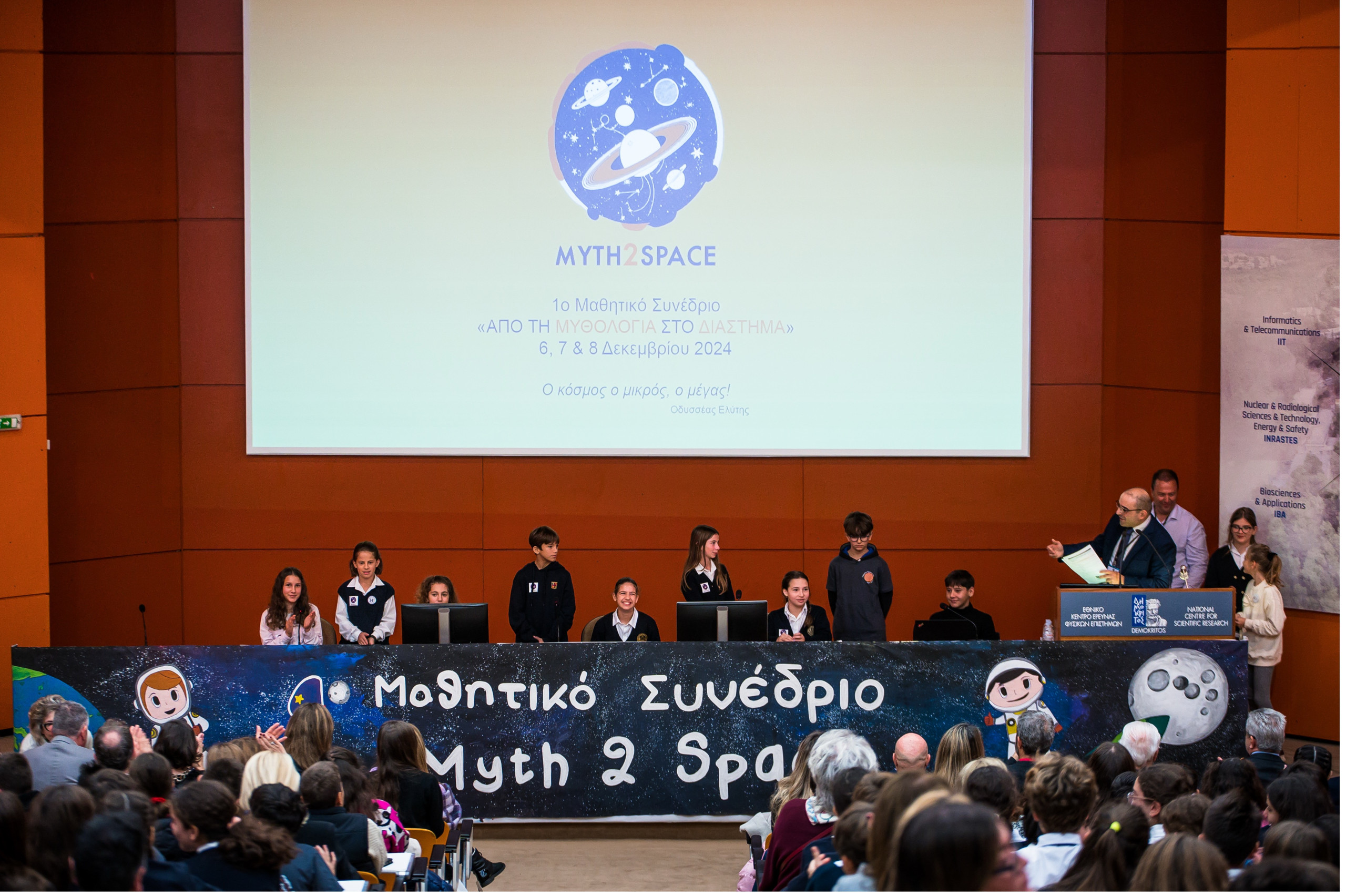
Celebrating Five Years of ALPHA MISSION – ΔELOS, Bettany Hughes revisited the initiative’s interdisciplinary roots, where ancestral intelligence, humanities, and the arts converge with science and space exploration. Highlights included the unveiling of a commemorative Hellenic Post stamp series by Daniel Benardout, Chairman of the Board of Directors, Hellenic Post, and moving presentations from the Myth2Space International Educational Network for Sustainability, a youth community of 15,000 students. Fourteen children-representatives from the Cyclades shared their vision for the future and performed the Geranos dance, symbolically pledging that today’s youth will help lead humanity out of the new labyrinth it faces.

ALPHA MISSION – ΔELOS 2025 Concluding Thoughts

Concluding Thoughts were offered in a reflective session moderated by award-winning historian, author and broadcaster Bettany Hughes. Final insights came from keynote speakers Carlos Moreno, Urban Planner and Scientific Director at the ETILab, IAE Paris-Panthéon Sorbonne UniversityYannis Zouganelis, Solar System Science Coordinator at the European Space Agency (ESA); and John Schellnhuber, Climatologist and Director General of IIASA, Founding Director of the Potsdam Institute for Climate Impact Research.

Carlos Moreno reflected on the need to move beyond linear, car-dependent cities toward more human-centred, proximity-based urban models—what he calls social circularity. Drawing on the legacy of the1963 Delos Declaration and his concept of the 15-minute city, the renowned urbanist called for a new urban paradigm that restores our connection with time, place, nature and one another.

Yannis Zouganelis presented the European Space Agency as a modern alliance exploring the cosmos collaboratively. He highlighted key missions like Solar Orbiter and warned that Venus’s climate history serves as a stark reminder of Earth’s fragility. Zouganelis asserted that space is a mirror reflecting humanity’s choices, calling for cross-border cooperation and ethical responsibility in both planetary stewardship and extraterrestrial ambition.

John Schellnhuber emphasised that the built environment—responsible for 40% of global emissions—holds the key to climate repair. By shifting from carbon-intensive materials like concrete and steel to regenerative, organic ones such as timber, bamboo, and clay, architecture cannot only reduce emissions but actively extract carbon from the atmosphere.“Saving the world in style,” he said, means designing sustainably, beautifully and inclusively —transforming our cities from climate culprits into climate saviours.

As the sun set, the event culminated at the island’s ancient theatre with “Ancient Thoughts and Cosmic Odes”, a lyrical tribute in which traditional melodies blended seamlessly with classical compositions—offering a living testament that all things, while preserving their uniqueness, can come together as one.

Karen ní Mheallaigh, Professor of Classics at Johns Hopkins University, reflected on the myth of Delos as a symbol of cosmic centrality and connection. She illustrated how ancient stories—like Leto’s wandering and Lucian’s imagined journey to the moon—still speak to modern themes of perspective, place, and our relationship to the Earth and cosmos. Along with Bettany Hughes, they read ancient and modern accounts on Delos and outer space, accompanied by live performances from Diana Tishchenko (violin), Sokratis Sinopoulos (lyra), Zelişah Kızılkan (voice, duduk), and Alexandros Rizopoulos (percussion).

From the mythic clarity of Delos to the frontier of the stars, the 5th Delos Global Gathering reaffirmed an enduring truth: that to dwell in space wisely, we must first understand how to dwell justly—with reverence, knowledge, and harmony—onEarth.

ALPHA MISSION – ΔELOS 2025 is realised with the support of:

sponsors: Monterock International, Qualco Foundation & Qualco Group, Alpha Bank

donor: COSMOTE TELEKOM

official airline partner: Aegean Airlines

travel partners: Blue Star Ferries, Autohellas Hertz

special partner: ELTA / Hellenic Post

Special thanks to the Municipality of Mykonos, Evangelos Pistiolis Foundation, Rtdeco Event Services, and View Master events.

More on ALPHA MISSION – ΔELOS

ALPHA MISSION – ΔELOS is a global initiative —by theWorld Human Forum— dedicated to redefining humanity’s narrative in the face of the climate crisis. Inspired by NASA’s Artemis Mission, which will send the first woman to the Moon, ALPHA MISSION – ΔELOS draws on the symbolic heritage of theGreek island Delos—the mythical birthplace of the gods Apollo and Artemis, once a cosmopolitan centre of the ancient Mediterranean, now threatened by climate change. The initiative aims to raise awareness about environmental challenges and foster the creation of a life-affirming civilisation that cherishes and preserves our only home, Earth.

About the World Human Forum

World Human Forum is a think-and-do tank, a knowledge and action hub designed to help build a brighter future for all. A global citizens’ initiative which highlights and interconnects the innovative forces of our planet towards the creation of a genuine ecological civilisation.
3rd Delphic Festival: A Celebration for Humanity

“And on that day, the sound of drums and fifes will drown out the sounds of cannons and guns”

A full house gathered at the V Hotel Delphi on April 10, 2025, for the unveiling of the initiative to relight the flame of the Delphic Festival, an event that was warmly embraced by the local community. The inspiring endeavor was presented by Maria Efthymiou, Professor Emerita at the National and Kapodistrian University of Athens; Alexandra Mitsotaki, Executive President and Co-founder of the World Human Forum; Panagiotis Tagalis, Mayor of Delphi; and Kostas Konstantinidis, CEO of PostScriptum. The event was moderated by Christos Carras, Founder and Director of the CCSC. Also present was poet Eleni Sikelianos, the great-granddaughter of Angelos and Eva Sikelianos.

3rd Delphic Festival announced during the Delphi Economic Forum X

2027 marks the 100th anniversary of the first Delphic Festival – the initiative by Angelos Sikelianos and Eva Palmer that embodied the vision of the Delphic Idea. Their dream was to make Delphi once again a living center of harmony, unity, and cultural renaissance. The World Human Forum initiates and coordinates the re-generation of the Delphic Festival. After all, Delphi was, in 2017, the symbolic and geographical starting point for the creation of the World Human Forum.

“After eight years, three gatherings and a journey through Delos, Eleusis and Aristotle’s Lyceum, we return to the emblematic land of Apollo, bringing with us the experience and the global network we have built along the way. We aim to bring together diverse forces that break the silos, connect the dots and believe in the value of a global movement for spiritual awakening through art, science, tradition and humanistic values”, stated Alexandra Mitsotaki.

The event was hosted within the framework of the Delphi Economic Forum. The opening remarks were delivered by Symeon G. Tsomokos, Founder and President of the Delphi Economic Forum, who expressed his support for the initiative. Representing Regional Governor Fanis Spanos, Maria-Pagonitsa Aravantinou conveyed the support of the Region of Central Greece.

A Journey that Starts in Delphi, but Concerns the Whole Planet

The 3rd Delphic Festival aims to bring together initiatives and individuals from around the globe. “Together, we will work towards finding solutions to the great challenges of our time – climate crisis, inequalities, loneliness, and the crisis of democracy –, we will imagine, and try to create a better world. We will plant collective seeds so that a new narrative for humanity may blossom”, highlighted the President of the World Human Forum.

In the anniversary year of 2027, this meta-Delphic Festival will highlight the legacy of Angelos Sikelianos and Eva Palmer with concerts, performances, symposia, workshops, multidisciplinary events and more. The aim is for these events to be held every three years as a triennial dedicated to art, tradition, science, dialogue and inner development.

The Delphic Idea: A Vision Rooted in Ancient Wisdom

Poet Angelos Sikelianos and his wife Eva Palmer believed that culture could lead to the moral and spiritual elevation of humanity. The Delphic Idea they articulated is based on the concept of global unity. It proposes a return to a deeper connection with our roots, not as nostalgia for the past, but as a foundation for reimagining the future.

Central to this vision are the Delphic Festivals, organised in 1927 and 1930, which brought together ancient drama, music, sports, dance, public participation, and spiritual exploration.

Paraphrasing Eva Palmer, poet Eleni Sikelianos, reflected “And on that day, the sound of drums and fifes will drown out the sounds of cannons and guns”. She remarked further, “That is very clearly what their mission was here in Delphi. There are forces in the world at this moment waging a war against the imagination, the profoundly creative force within us. So, what do we do? We have the opportunity to take up what Eva and Angelos were doing and continue”.

“While it may seem idealistic, it is a goal worth striving for”, declared Maria Efthymiou, having reviewed historical efforts aimed at resolving conflicts around the world. “The people felt that both the initiative and the tradition belonged to them. I believe we will have no trouble regaining support of the local community. It’s a challenge, but if successful, the rewards will be substantial”, said the renowned historian.

The meta-Delphic Festivals as a Driver of Development for the Delphi Region

The initiative was embraced from the very beginning by the Municipality of Delphi. Mayor Panagiotis Tagalis referred to it as a “golden opportunity” to regenerate the Navel of the Earth in the new era, to connect all the forces of the region with a common purpose, and to transform Delphi into a modern city through sustainable and developmental strategies. “Delphi has the potential to become a place of inspiration, dialogue, and cooperation, as well as a driver of development for the entire region, through collaboration and interaction”, he stated.

Kostas Konstantinidis of PostScriptum, a company dedicated to highlighting the developmental potential of culture, emphasized that the Municipality of Delphi provides an ideal setting for the implementation of such an initiative. He highlighted the importance of bringing together diverse forces from the quintuple helix –comprising the public sector, businesses, civil society, and academia– to identify shared goals and achieve them through the integration of science, art, and innovation. Additionally, he stressed that such projects are eligible for funding, as they align with the core principles of the New European Bauhaus.

In a world marked by division, conflict, and crisis, the need for shared values, genuine communication, and the cultivation of the human spirit through art is more urgent than ever. The regeneration of the Delphic Festival as an immersive experience and spiritual proposition seeks to offer meaning, perspective, and hope.

Learn more at: https://delphi.worldhumanforum.earth/

“Eden in Olympia” behind-the-scenes!

A year ago today, Ancient Olympia in full bloom was flooded with heavenly voices thanks to the cinematic adaptation of Joyce DiDonato’s “Eden” project. To mark the anniversary, we’ve created a heartfelt behind-the-scenes video.

“Eden in Olympia” with Joyce DiDonato

In April 2024 the American acclaimed mezzo-soprano, accompanied by the ensemble Il Pomo d’Oro, French director Olivier Simonnet, and three children’s choirs the Children’s Choir of the Greek National Opera, Chœurs ECLATS from France, and the intercultural El Sistema Greece – embarked on an unprecedented emotional journey. Singing music of four centuries, they aimed to restore our awareness of the strength and fragility of nature and to reflect on humanity’s place within our wondrous kaleidoscopic world.

Joyce DiDonato on “Eden in Olympia”

“Eden here has been an amazing experience of joining people from different cultures, different backgrounds. Celebrating the power of human spirit to connect, to return to our natural connection to the Earth and to do it together” stated Joyce DiDonato. The famous singer, also, added that “It has been an extraordinary experience to be here in ancient Olympia, surrounded by a literal Eden at the peak of its powers, in such a historically rich place that was built to celebrate the best of humanity and call all of us to rise to that level”.

“Eden in Olympia”: the project goals

A landmark project that speaks directly to the heart, “Eden in Olympia” has three main goals:
• To serve as a powerful call for the protection of biodiversity and a re-evaluation of humanity’s relationship with nature.
• To make classical music and opera accessible to all, breaking down barriers and prejudices.
• To provide viewers the opportunity to discover and experience Ancient Olympia in an unprecedented and immersive way.

Watch “Eden in Olympia” behind the scenes

The official world premiere was given at Megaron, the Athens Concert Hall, following the symbolic first screening in Ancient Olympia. Twelve months on, the film’s journey continues, planting seeds of hope with upcoming screenings around the world. Spreading the messages of regeneration and of a life-affirming civilisation.

“Join” us behind the scenes and feel the essence of the project!