1927–2027: Re-Generating the Delphic Idea for the Future of Humanity

The programme of the 3rd Delphic Festival takes shape 7, 8, 9 & 10 May 2027

At Delphi, the ancient navel of the world—the Omphalos—, conversations have always mattered. This was once a sanctuary of encounter, a space where conflicts paused, where dialogue replaced confrontation. A spiritual but also political space where questions were asked. A space of ideas and principles that still echo: Know thyself. Nothing in excess. It is no coincidence that this is also where the World Human Forum was born.

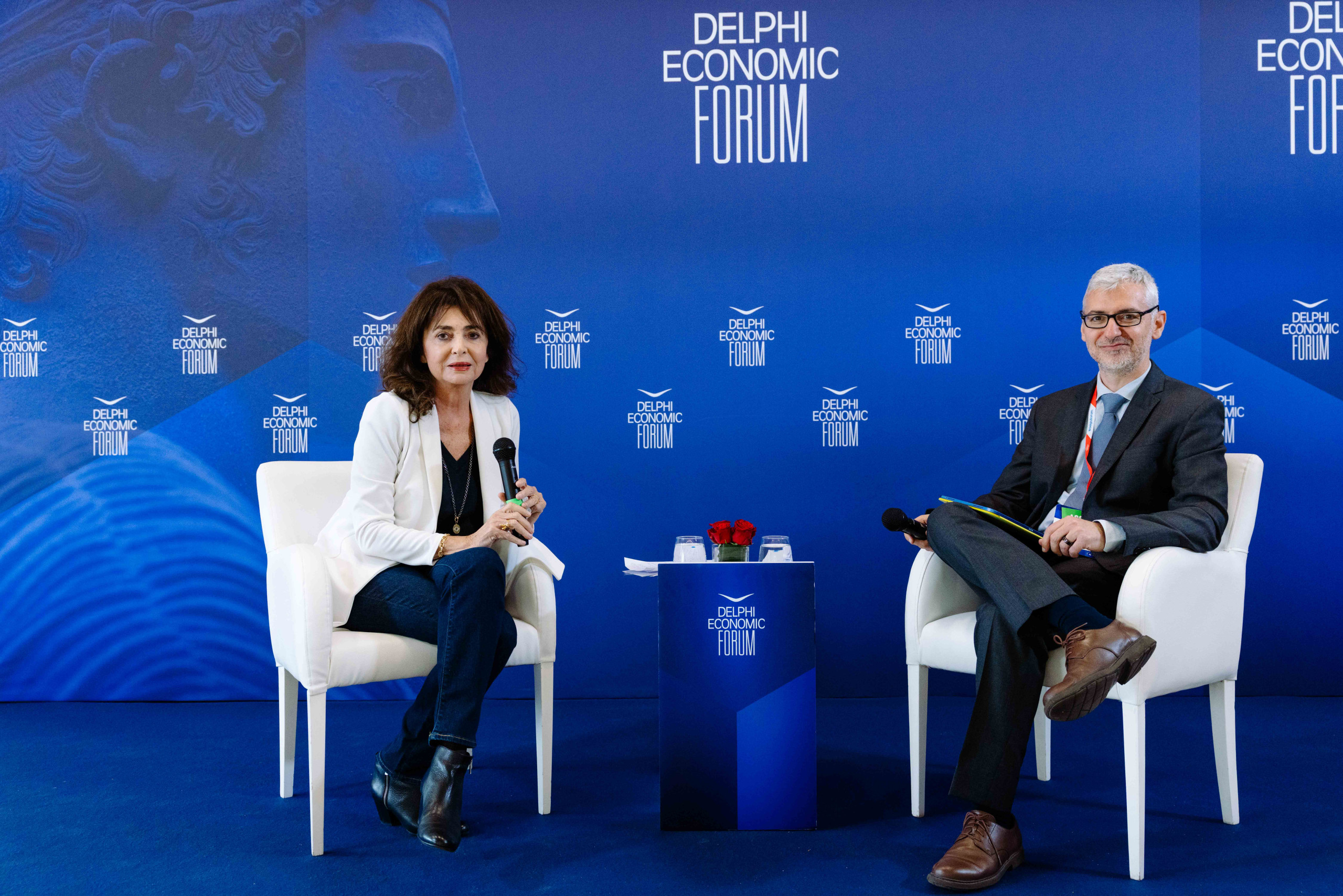
During the 1927–2027: Re-Generating the Delphic Idea for the Future of Humanity discussion at the Delphi Economic Forum, Alexandra Mitsotaki, President and co-founder of the World Human Forum, spoke with Thodoris Georgakopoulos, Founder of 1830 lab, about the need to make Delphi relevant today.

As she underlined, drawing on the work of historian and author Michael Scott, Delphi “must never remain silent.” Its relevance is not symbolic but urgent in a world of deep global fractures—climate, democracy, inequality, meaning—that can no longer be addressed with top-down solutions.

From Fragmentation to Integration: The World Human Forum Perspective

A central idea presented during the discussion—and reflected in the World Human Forum “Delphic Cube” methodology—is that complex global challenges cannot be addressed in isolation. They require an integrated approach connecting regeneration, democracy, education, inner transformation, science & technology and the arts.

The World Human Forum is grounded in the belief that citizens are not passive observers, but active agents of transformation when given the space and tools to participate meaningfully. Since its inception in Delphi in 2017, the Forum based on collective intelligence, has worked across continents and disciplines to connect initiatives, ideas and communities. 

 The 3rd Delphic Festival

Re-connecting to Delphi, its symbolic base, the World Human Forum is preparing the 3rd Delphic Festival in 2027, marking 100 years since the first Delphic Festival initiated by Angelos Sikelianos and Eva Palmer. Back in 1927, they believed that Delphi could serve as a focal point for solidarity of people all over the world and for the preservation of classical, universal values. A space that would assist in the strengthening of a harmonious and peaceful coexistence through the interdisciplinary interaction of culture, science, philosophy, but also through the embodiment of the arts and crafts.  

Building on that, the upcoming edition will connect the Delphic Idea with the challenges of the 21st century, initiating a new endeavour “The Parliament for the Future”. It will bring together grassroots’ initiatives, artists, academia, policy thinkers & makers, citizens from all walks of life, in a shared conversation on governance, democracy and planetary challenges.

A powerful artistic programme curated by Jochen Sandig, co-founder and vice-president of the World Human Forum, will play a strong role in amplifying the message and sharing it with a wider audience. An emphasis will also be placed on local craftsmanship, reflecting the World Human Forum’s belief that regeneration must be rooted in living communities and cultural continuity.
Posted on

Artemis: from Delos to the Moon

Artemis II mission and the enduring message of ALPHA MISSION – ΔELOS on the need to protect life on planet Earth

On 1 April, millions of people from every corner of the planet watched live the historic launch of the Artemis II mission. For the first time in more than half a century—since Apollo 17 in 1972—a crewed space mission once again approached the Moon, even beholding its far side. During its ten-day journey, the Orion spacecraft, crewed by Reid Wiseman, Victor Glover, Christina Koch and Jeremy Hansen, carried around the natural satellite of the Earth the first woman, the first Black astronaut, and the first non-American astronaut. And while humanity returns to the Moon’s neighbourhood, for the past five years ALPHA MISSION – ΔELOS has been raising awareness about the need to protect life on our planet.

Apollo and Artemis: these historic missions were named after the gods of light and the Moon in ancient Greek mythology. An inspired and fitting connection, also highlighted by Dr Nicola Fox, NASA Head of Science, during her remarks in May 2024 at the 4th ALPHA MISSION – ΔELOS Gathering.

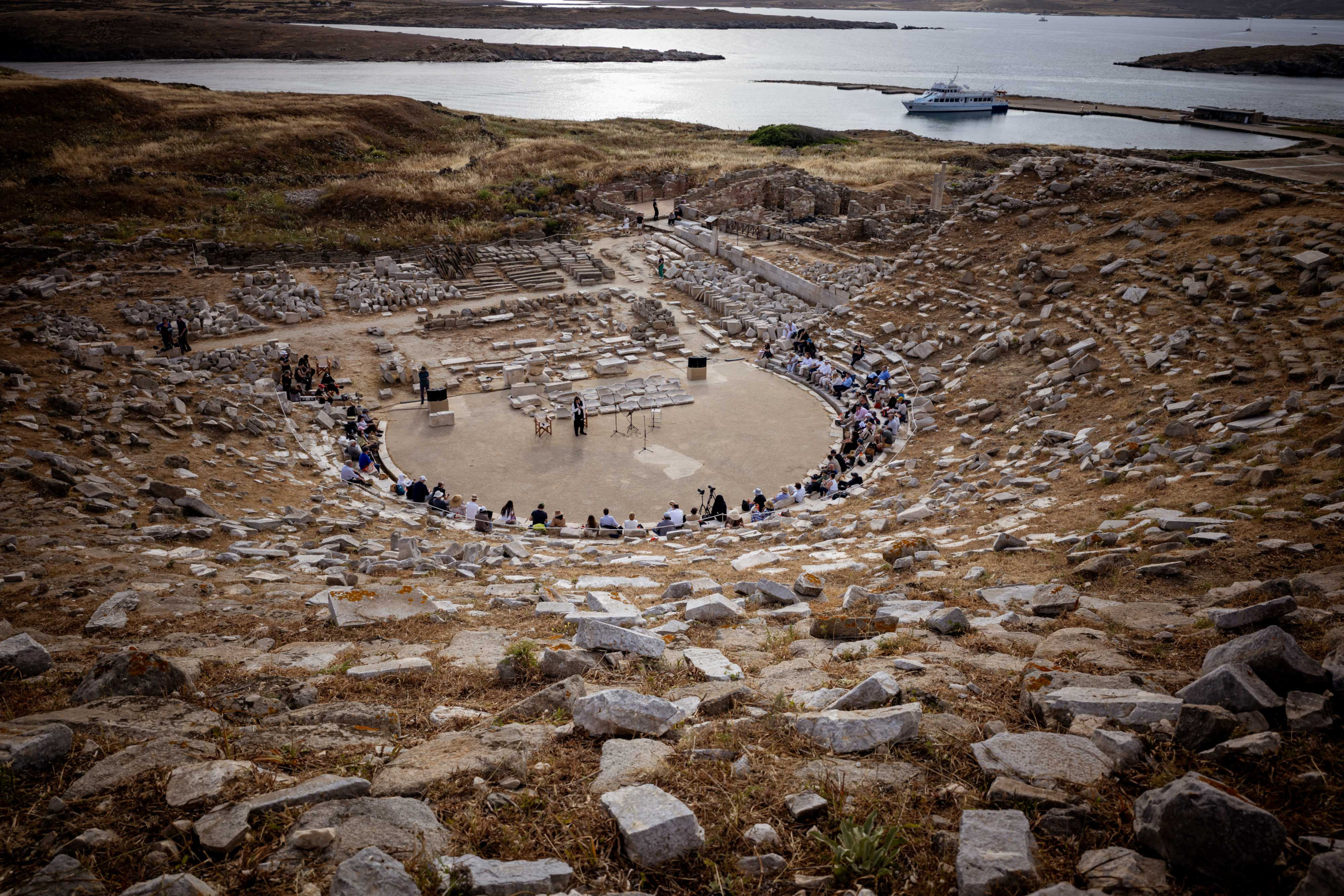
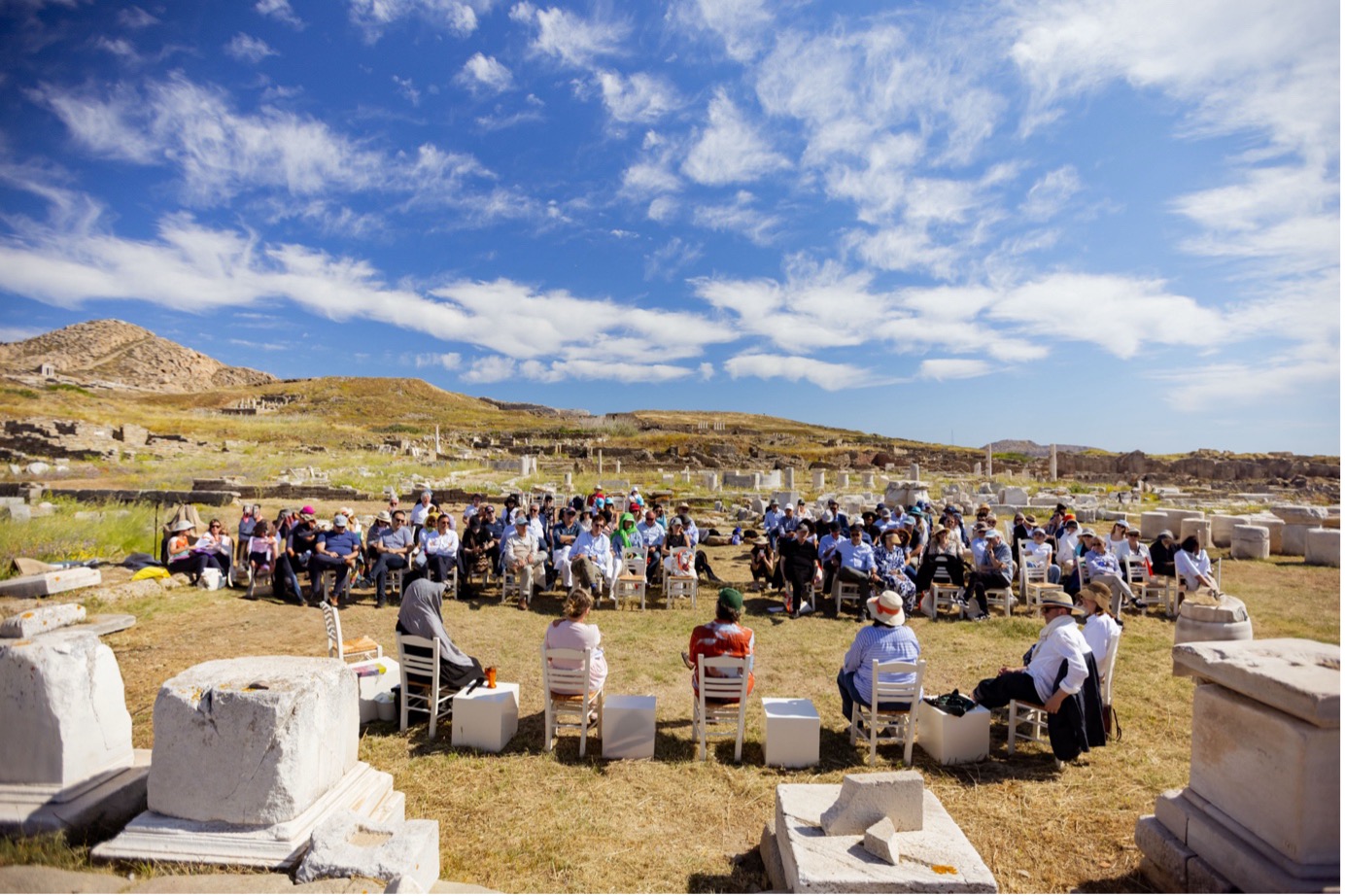
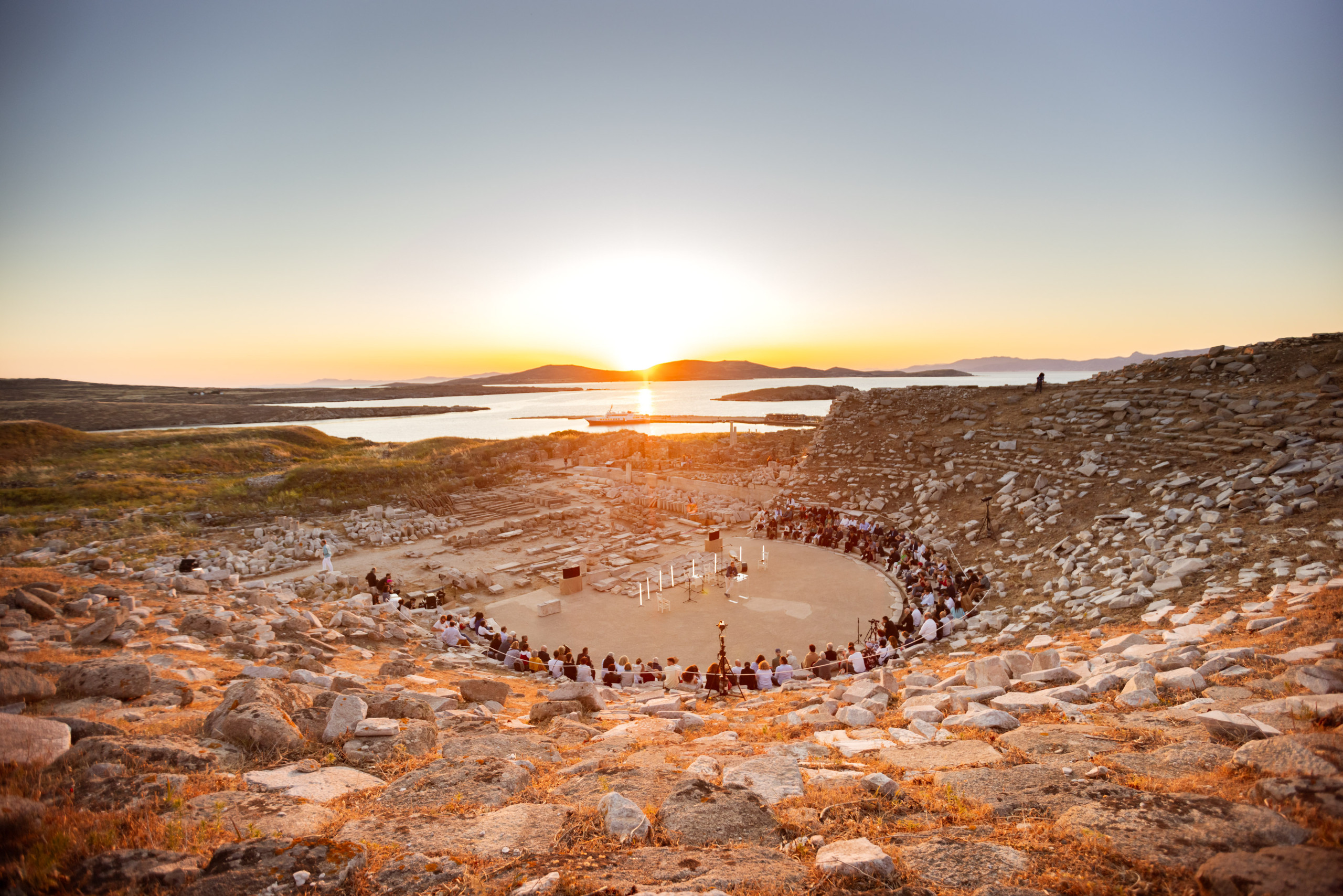
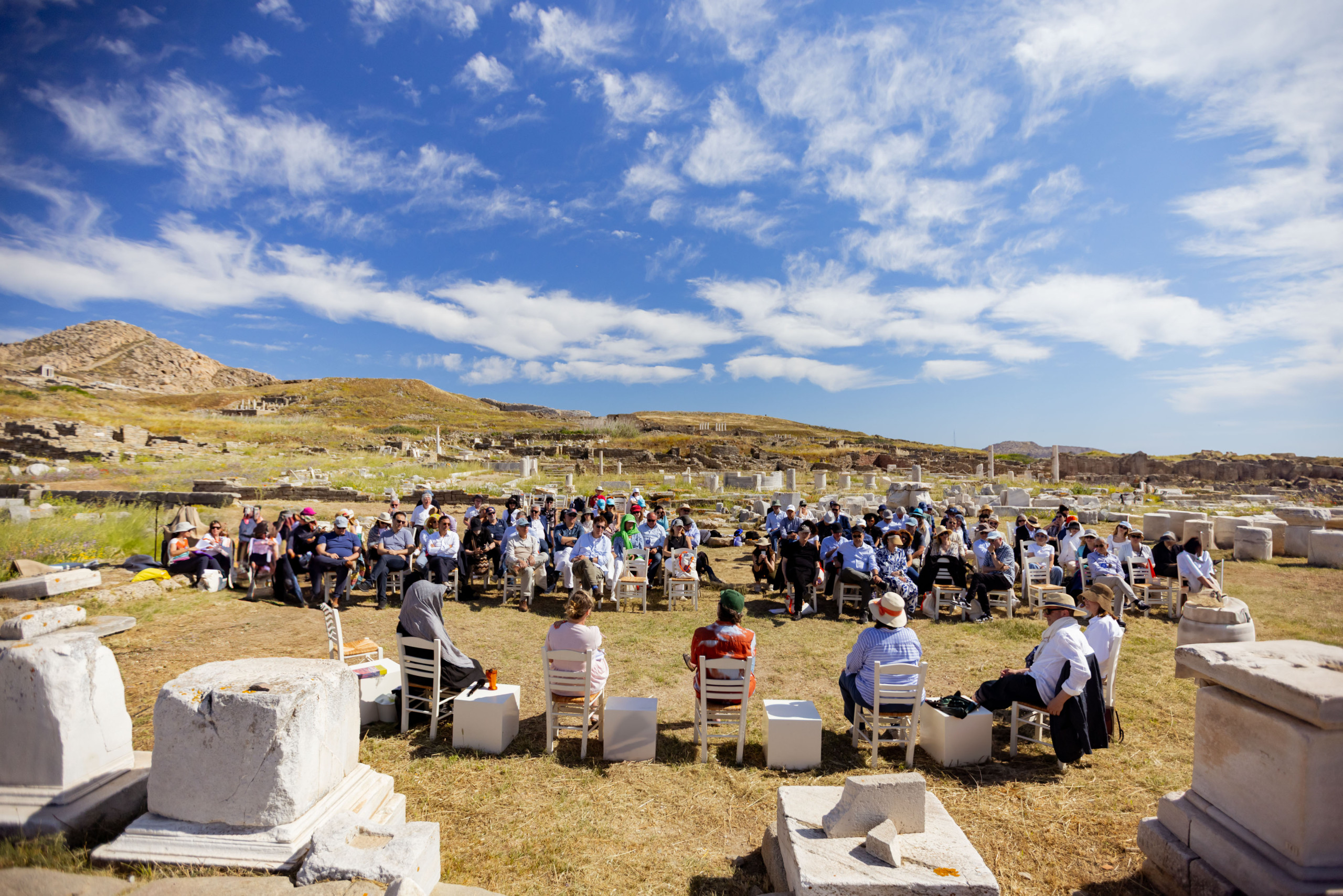
For it is on the sacred island of Delos—where, according to myth, the twin children of Leto and Zeus were born—that a new mission began at the same time as the Artemis mission. The  visionary initiative ALPHA MISSION – ΔELOS brings leading figures from diverse fields to the heart of the Cyclades every May to discuss the future of humanity and life on the “pale blue dot”, the only home we have ever known: Earth. The initiative has been supported since its early stages by Stamatios Krimigis, Emeritus Head of the Space Exploration Sector at the Johns Hopkins Applied Physics Laboratory and former President of the Academy of Athens.

The aim of ALPHA MISSION – ΔELOS is to raise awareness of the climate crisis. At this critical moment for our planet, Delos—the first cosmopolitan centre of the Mediterranean, where numerous languages were spoken and diverse faiths coexisted—is already being affected by rising sea levels. Today, it invites us to pause for a moment: to remember the roots that gave us wings—science and technology, but also ancestral intelligence, the humanities, the arts, and spirituality—and to imagine a civilisation that honours life in all its forms.

It is worth noting that, drawing on ALPHA MISSION – ΔELOS, the Artemis mission and its connection to Greek culture, the International Sustainability Education Network “From Mythology to Space – Myth2space” has been created. This innovative endeavour brings together pupils from urban centres and regional areas, fostering skills such as collaboration, critical thinking, computational thinking and a holistic approach to concepts. The network now includes 15,000 pupils from 713 classes in primary and secondary education.

You can watch the Delos international gatherings on the World Human Forum’s YouTube channel: https://www.youtube.com/channel/UCfWWGQFW64wLUNwMbjfy0RA

Posted on

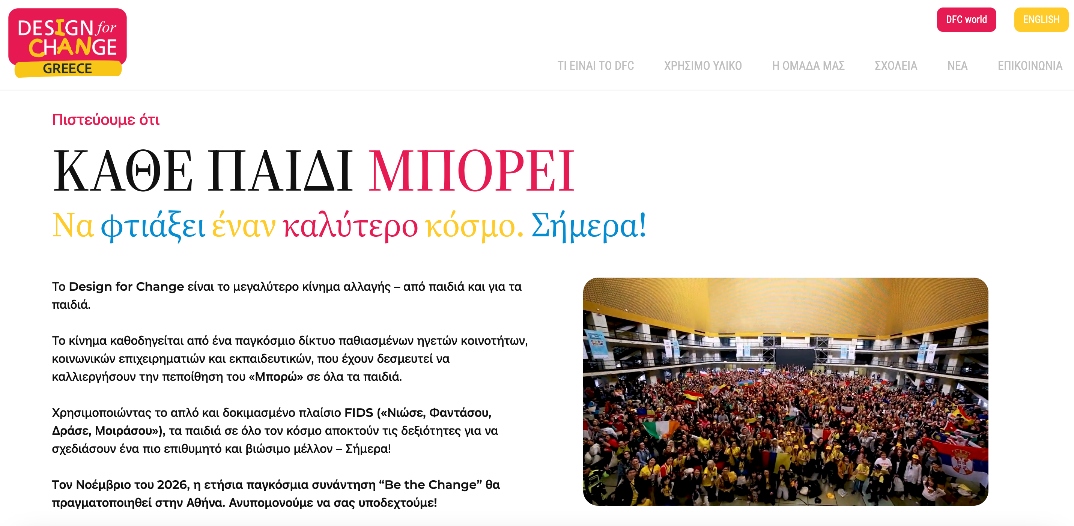
DFC Greece is now online!

The new Design for Change Greece website is live — in both Greek and English

Explore how Design for Change, the world’s largest movement of change by and for children, has empowered 2.03 million students across 69 countries and regions to take action on real-life challenges.
We firmly believe that young minds have the power to drive change for a brighter future. The movement is spearheaded by a global network of passionate community leaders, social entrepreneurs, designers and educators who are committed to unleashing the I CAN superpower in every child. Through the values of empathy, imagination, action and collaboration, children identify any situation that bothers them and work in teams to implement their solution in order to create a more desirable and sustainable future, today!

On dfcgreece.org you can:
• Discover the simple and proven FIDS (Feel, Imagine, Do, Share) framework
• Access practical classroom toolkits and resources
• Follow DFC Greece news and upcoming initiatives
• Learn more about the 2026 global “Be the Change” celebration in Athens
As the local partner of Design for Change, the World Human Forum invites educators and schools to explore the platform and join the movement.
Let’s activate the “I CAN” mindset in every child.

IVI© Model: Values-Driven Leadership for a Regenerative Future

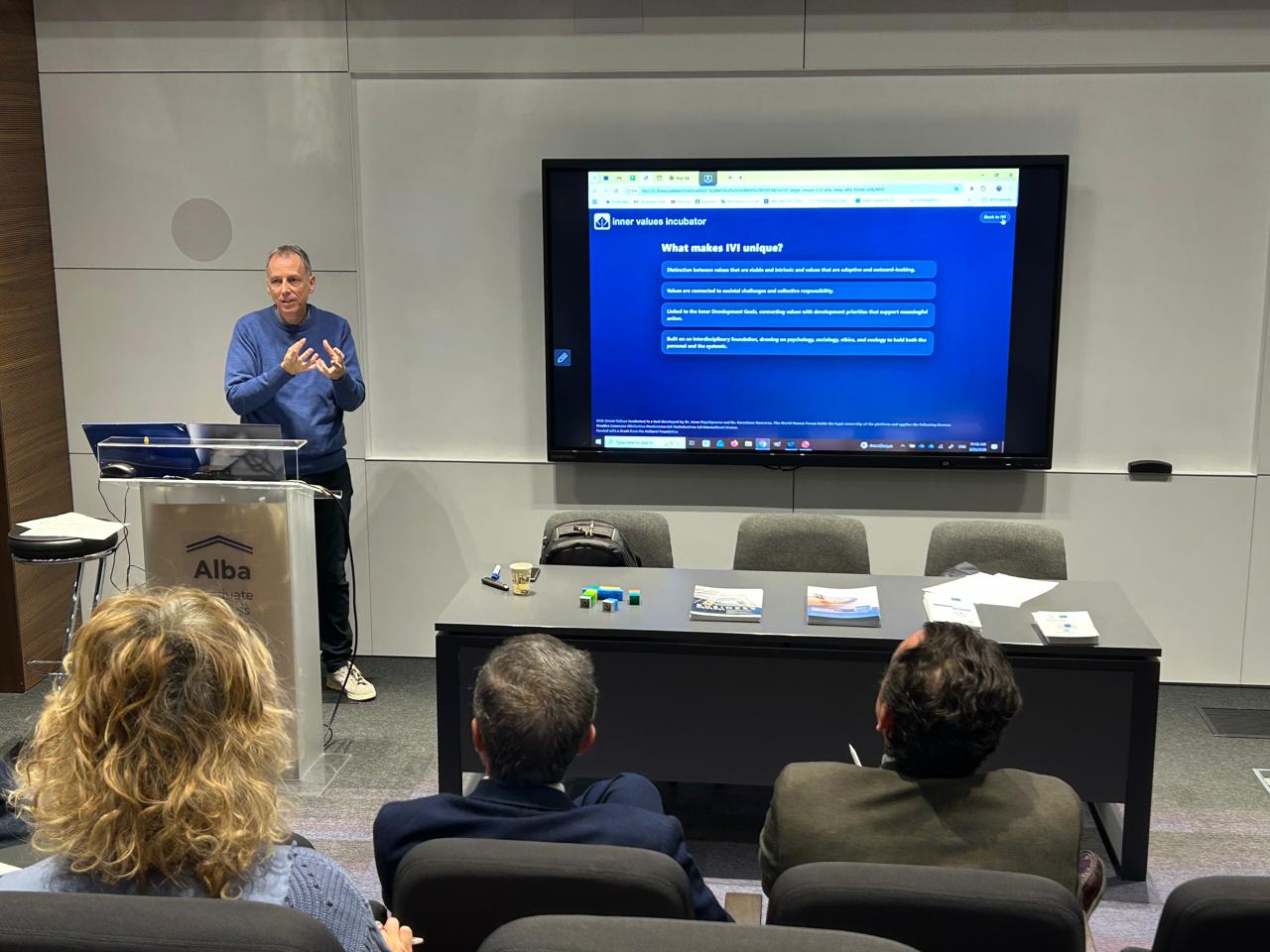
At the amphitheatre of ALBA Graduate Business School, on Thursday 26 February 2026, Dr Gerasimos Kouvaras delivered a master class titled “Intention Guides Attention: Values-Driven Leadership for a Regenerative Future” to an audience of corporate executives and academics.

The event was opened by Dr Kostas Axarloglou, Dean ALBA Association and Professor of International Business and Strategy at Alba Graduate Business School.

The session invited participants to rethink dominant economic and leadership paradigms in the context of today’s metacrisis, moving beyond sustainability towards regeneration and examining the inner shifts required for systemic transformation.

Drawing on the Delphic Cube developed by the World Human Forum and the Inner Development Goals framework, Dr Kouvaras presented the IVI© (Inner Values Incubator), a values-based reflection model he co-created with Dr Irene Papaligouras. The IVI© web-based platform is owned and offered by the World Human Forum, and its development and public launch were made possible through a grant from the Helidoni Foundation.

The master class created a space for critical questioning, personal reflection and dialogue on how inner development can become a core dimension of leadership education and organisational practice.

2nd Student Conference: From Mythology to Space

What we explored and enjoyed

Megaron – The Athens Concert Hall was filled with children’s voices and youthful inspiration on 16 and 17 January. The 2nd Student Conference “From Mythology to Space”, this year entitled “Kids talk with the stars”, brought together students, parents and educators in a great celebration — by children, for children.

The conference was organised by the International Sustainability Education Network “From Mythology to Space – Myth2space” and the World Human Forum, in collaboration with the Hellenic Space Center, the National Centre for Scientific Research “Demokritos”, the Philekpaideftiki Etaireia (Arsakeia – Tositseia Schools), Megaron – TheAthens Concert Hall, and the National Museum of Natural History Goulandris. This fruitful convergence among leading institutions stands as a model for the importance of an interdisciplinary approach.

The International Sustainability Education Network “From Mythology to Space – Myth2space” is coordinated by the Directorate of Primary Education of B΄ Athens and the Directorate of Primary Education of the Cyclades.

Myth2Space in Action: Highlights from 16–17 January at the Megaron

Students from urban centres and the regions, both from Greece and beyond, presented their joint projects developed during the 2024–2025 school year. As part of the International Sustainability Education Network “From Mythology to Space – Myth2space”, they wrote poems and created e-books, explored the links between mythology and the constellations, created a theatrical performance reflecting on “the days of the future”, technological progress and the environmental crisis, became… space water explorers, and examined the contribution of women to science.

Participating with enthusiasm in their own conference, the students met peers, scientists, and artists. They unlocked knowledge about nature, science, and art through a series of revealing workshops and guided tours covering topics such as winds and waters, biodiversity, the Antikythera Mechanism, fake news, the ancient Greek seven-stringed lyre, and more. They showcased their work.

And there was more: they applauded the children from the Arsakeia Kindergartens who sang about the stars, as well as the melodic collaboration between the distinguished German-Greek pianist and co-founder of the Molyvos International Music Festival, Danae Doerken, “The Lyrists of the Library” from the Athens Music School, and the student pianist Eleonora Sechou.

“There are no limits to what you can imagine and create. Only your imagination, which gives birth to the dream of who we want to become and what we want to achieve in life, and the creative power that allows us to be inspired and find solutions to real-world challenges”, said Minister of Education, Religious Affairs and Sports, Sofia Zacharaki, at the opening of the conference. Commenting on the initiative’s impact, she added: “I am particularly pleased with how the Network has developed, as every year the participation of schools and students grows impressively, showing that this is a truly meaningful educational experience”.

Addressing the children, Professor Spyros Doukakis, President of the Institute of Educational Policy, emphasised: “The world will ask you not just what you know. It will ask you what kind of future you can imagine. And you are already doing so. Myths give you wings. Science gives you the map. You decide where and how you will fly. Look to the stars — but take care of the Earth that holds you. Dream freely — but build responsibly. And above all, believe that the world can change… because you are the ones who will change it”.

The conference was supported by a donation from Raycap S.A.

Media Sponsors: ΕΡΤ, ΕΡΤnews Radio 105,8

2nd Student Conference Myth2Space: Distinguished speakers — captivating presentations

In the packed Dimitris Mitropoulos Hall of Megaron – The Athens Concert Hall, distinguished figures in science, culture, society, and the environment took to the stage.

In his talk on “Innovation with Positive Social Impact”, Yannis Assael, Staff Research Scientist at Google DeepMind, highlighted the importance of testing unconventional ideas, pursuing our dreams, and adapting quickly to change, drawing on examples from research and interdisciplinary collaboration. He encouraged students to use knowledge and teamwork to make a positive contribution to the world, earning their enthusiastic applause. Responding to the children’s questions, he emphasised that artificial intelligence is a tool in human hands, capable of enhancing both human potential and its own effectiveness, and underlined the importance of using it responsibly.

Maria Efthymiou, Emerita Professor of History at the National and Kapodistrian University of Athens, delivered a message on the enduring significance of myths as tools for understanding humanity and society, both in the past and today. With references to Prometheus and Athena, she connected mythology to contemporary considerations on knowledge, vigilance, and the limits of human progress, emphasising the importance of critical thinking in facing modern challenges.

Titled “Biodiversity: Everything is Connected”, the talk by Fali Voyatzaki, President of the National Museum of Natural History Goulandris, focused on the profound relationship between humans and nature, as well as the urgent need to address the environmental crisis. Referring to climate change and biodiversity loss, she emphasised the role of science, education, and collective responsibility. She urged the children to listen to the “voice of the Earth” and to actively contribute to shaping a new ecological civilisation.

Alexandra Mitsotaki, co-founder and President of the World Human Forum, presented Alpha Mission Δelos, the initiative that inspired the creation of the “Myth to Space” Network. The goal of AMD is to raise awareness of environmental issues and foster a life-affirming civilisation that respects and safeguards our only home, planet Earth. She highlighted the interdependence of all forms of life and stressed that tackling these challenges requires both the sciences and the humanities, as well as the wisdom of our ancestors.

Myrto Vounatsou, Artistic and Creative Director of the World Human Forum, highlighted the power of art as a means of connecting people with one another, with themselves, and with nature, as well as a tool for cultivating ecological awareness. Through the “Green Tales” programme, she illustrated how children from different countries, using art and simple technology, told stories with an environmental message. Through art and collective creation, children learn to collaborate, express themselves, and develop a sense of responsibility towards nature.

Anezina Solomonidou, Planetologist and Senior Scientist at the Hellenic Space Center, invited the children on an imaginative journey through our solar system, exploring the timeless question of whether life exists beyond Earth. She focused on the icy moons of the giant planets, such as Europa, Enceladus, and Titan, explaining why their subsurface oceans are considered potential habitats. She emphasised that science, through careful inquiry, questioning, and space missions, helps us understand our place in the universe.

Niki Evelpidou, Professor of Geology and Geoenvironment at the University of Athens, shed light on how Greek myths (e.g., Enceladus, Hercules, Ariadne) contain real geological knowledge and reveal the ways in which people of the past interpreted natural phenomena such as earthquakes, floods, and changes in the landscape. She also showed how science “reads” the Earth to understand the past and anticipate the future, noting that careful observation of nature can also lead to modern solutions for environmental protection.

The conference presentations, talks, and concerts are available on the Myth2Space YouTube channel: https://www.youtube.com/@mythtospace

Kids talk with the Stars

Speakers, Workshops, and Concerts at the 2nd Student Conference “From Mythology to Space”

Student presentations (both in person and online), lectures by distinguished figures in scientific research, culture, and the environment, as well as hands-on workshops and concerts, will take place at the 2nd Student Conference “From Mythology to Space”. This year’s edition, titled “Kids Talk with the Stars,” will be held at Megaron – The Athens Concert Hall on 16 and 17 January 2026.

A major celebration by children, for children, the conference provides a platform for the students to present the projects and collaborative work carried out nationwide during the second year of the International Sustainability Education Network “From Mythology to Space – Myth2space”. This initiative empowers students and fosters friendships between pupils from urban centres and regional areas.

Free admission, with priority tickets. Friday 16 January: 16:30–18:30. Saturday 17 January: 09:45–12:50, 14:15–18:30, 18:30–19:30. Priority tickets will be available 30 minutes before the start of each session.

2nd Student Conference “From Mythology to Space”: Speakers and Concerts

In addition to the students, the following distinguished speakers will take the stage:

Yiannis Assael, Staff Research Scientist, Google DeepMind & Special Advisor on Artificial Intelligence, Hellenic Ministry of Digital Governance (“Innovation with a Positive Social Impact”).

Maria Efthymiou, Emeritus Professor of History, National and Kapodistrian University of Athens.

Fali G. Voyiatzaki, President, National Museum of Natural History Goulandris (“Biodiversity: Everything Is Connected”).

Alexandra Mitsotaki, President and Co-Founder, World Human Forum.

Myrto Vounatsou, Artistic and Creative Director, World Human Forum.

Anezina Solomonidou, Planetologist and Senior Scientist, Hellenic Space Center (“Searching for Life on the Icy Moons of the Giant Planets”).

Niki Evelpidou, Professor, Department of Geology and Geoenvironment, National and Kapodistrian University of Athens (“Our Earth, Our Myths, and the Future”).

To close the conference, the German-Greek pianist and co-founder of the Molyvos International Music Festival, Danae Doerken, will perform alongside the Ancient Greek lyre ensemble of the Athens Music School, “The Lyrists of the Library”. The concert will also feature Eleonora Sechou, a student from Limnos, performing on the piano.

On 17 January, pupils from the Arsakeia Kindergartens will take us on a melodic journey among the stars.

Workshops & Presentations at the 2nd Student Conference “From Mythology to Space”

The two-day event also features a rich programme of activities—workshops and presentations—by leading scientific, research, and cultural institutions.

  • Discovering Microgravity (Hellenic Space Center)
  • From the Stars to the Antikythera Mechanism and Microchips (NCSR Demokritos)
  • From Movement to Music and from Rhythm to Sound… (Athens Music School)
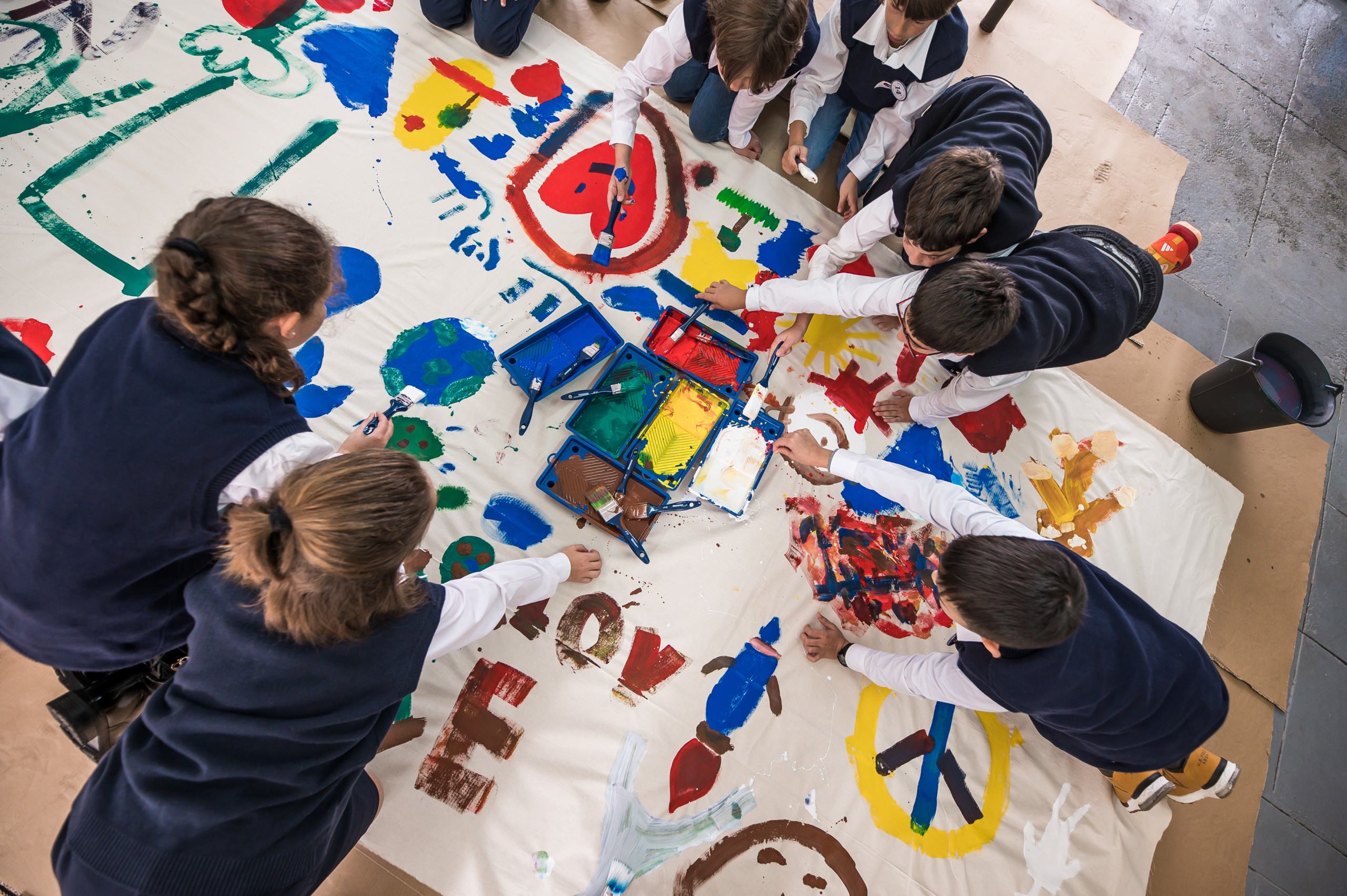
  • ArTogether: A Collective Painting Creation
  • WikiEllinisti: Wikipedia in Greek (WikiEllinisti)
  • Biodiversity: Everything is Connected (National Museum of Natural History Goulandris)
  • The Delphic Cube and the Little Global Citizen (World Human Forum)
  • Design for Change: Students as Active Citizens (Design for Change)
  • Intergalactic Stories: DecodingMyths through Cinematic Imagery (EKKOMED)
  • The Church Organ of Meraron – The Athens Concert Hall (Megaron – The Athens Concert Hall)
  • Ancient Greek Lyre Workshop (Athens Music School)
  • Climate Change and Cultural Heritage: The Delos Climate Observatory (Academy of Athens, in collaboration with the National Observatory of Athens)
  • News from… Another Planet: How to Recognise False Content (EKKOMED)
  • Guided Tour of the Megaron – The Athens Concert Hall (Megaron – The Athens Concert Hall)
  • On Winds & Waters (National Observatory of Athens / Meteo.gr Unit)
  • Green Tales (Green Tales)
  • The Universe Plays Music (Lilian Voudouri Music Library, Friends of Music Society)
  • The Myth of King Erisichthon

Full conference programme (in Greek): https://mythtospace.sites.sch.gr/2_stud_conf/

2nd Student Conference “From Mythology to Space”: Conference Organisers

The conference is organised by the International Sustainability Education Network “From Mythology to Space – Myth2space” and the World Human Forum, in collaboration with the Hellenic Space Center, the National Centre for Scientific Research “Demokritos”, the Philekpaideftiki Etaireia (Arsakeia – Tositseia Schools), Megaron – The Athens Concert Hall, and the National Museum of Natural History Goulandris.

The International Sustainability Education Network “From Mythology to Space – Myth2space” is coordinated by the Directorate of Primary Education of B΄ Athens and the Directorate of Primary Education of the Cyclades.

The conference is supported by a donation from Raycap S.A.

Media Sponsors: ΕΡΤ, ΕΡΤnews Radio 105,8

World Human Forum – 2025: A year in review

Global gatherings, leading voices from diverse fields, and sold-out artistic events — 2025 was a year to remember. Let’s relive this remarkable journey together.

2025 was a year defined by community and collaboration, impact and groundbreaking initiatives. It marked our return on-site in Delphi —the World Human Forum’s starting point and symbolic base— as well as in Delos, Aristotle’s Lyceum in Athens and Elefsina for our major on-going symposia. At the same time, we reached across the globe toward new promising beginnings. Join us as we revisit key moments from this inspiring journey.

World Human Forum – Key moments from 2025

Joyce DiDonato: Eden in Olympia – A Cinematic Ode to Planet Earth

The breathtaking film-concert featuring the world-renowned mezzo-soprano Joyce DiDonato, premiered at Megaron – The Athens Concert Hall on 11 January and was also presented at the Megaron Concert Hall of Thessaloniki on 5 September. Blending the timeless beauty of classical and pre-classical music with an urgent environmental message, this cinematic experience invites audiences on a powerful journey through nature’s majesty and fragility.

Filmed on Ancient Olympia, Eden in Olympia is a call to reconnect with the living world and reflect on our place within it. Featuring the ensemble Il Pomo d’Oro and children’s choirs from Greece and France – the Children’s Choir of the Greek National Opera, the Chœurs ECLATS choir, and the intercultural El Sistema Greece – the film bridges cultures, generations, and artistic expressions. Both screenings culminated in live choral performances of the project’s anthem, Seeds of Hope.

At a time when the world faces unprecedented ecological challenges, with wildfires ravaging more than 10,000 square kilometres across the EU since the beginning of 2025, Eden in Olympia reminds us that the Earth transcends borders. Following global presentations, the film continues its mission: to inspire awe, reflection, and collective action.

3rd Delphic Festival – A Celebration for Humanity

A full house gathered at the V Hotel Delphi on 10 April 2025, for the unveiling of the initiative to relight the flame of the Delphic Festival, an event that was warmly embraced by the local community.

2027 marks the 100th anniversary of the first Delphic Festival—the initiative by Angelos Sikelianos and Eva Palmer that embodied the vision of the Delphic Idea. Their dream was to make Delphi once again a living center of harmony, unity, and cultural renaissance.

The World Human Forum initiates and coordinates the regeneration of the Delphic Festival.  Τhis meta-Delphic Festival will highlight the Sikelianos’ legacy with concerts, performances, symposia, workshops, multidisciplinary events and more. The aim is for these events to be held every three years as a triennial dedicated to art, tradition, science, dialogue and inner development.

The inspiring endeavor was presented by Maria Efthymiou, Professor Emerita at the National and Kapodistrian University of Athens; Alexandra Mitsotaki, Executive President and Co-founder of the World Human Forum; Panagiotis Tagalis, Mayor of Delphi; and Kostas Konstantinidis, CEO of PostScriptum. The event was moderated by Christos Carras, Founder and Director of the CCSC. Also present was poet Eleni Sikelianos, the great-granddaughter of Angelos and Eva Sikelianos. The event was hosted within the framework of the Delphi Economic Forum.

Find out more at https://delphi.worldhumanforum.earth/

5th ALPHA MISSION – ΔELOS Global Gathering – Human Settlements: From Ancestral Wisdom to Celestial Futures

On 26–27 May 2025, on the sacred island of Delos—birthplace of Apollo and Artemis, once one of the first cosmopolitan centres of the Mediterranean and now an open-air museum—the 5th ALPHA MISSION – ΔELOS Global Gathering took place. Entitled “Human Settlements: From the Earth to the Moon and Beyond”, it invited a global constellation of thinkers, scientists, and artists to reimagine how we inhabit the world—and worlds beyond. At the core of the gathering was a tribute to the legacy of prominent urban planner Constantinos Doxiadis and the Delos Symposia of the 1960s and 70s.

Among this year’s participants were distinguished speakers John Schellnhuber, Carlos Moreno, Athena Coustenis, Yannis Zouganelis, Mark Wigley, Beatriz Colomina, Daniel A. Barber, David Gissen, Dimitris Philippides, Simon Richards, Nahum Romero, Catherine Gall, Thomas Doxiadis, Véronique Chankowski and others.

As part of this year’s gathering, the World Human Forum unveiled a new sculptural installation created by the renowned sculptor Praxiteles Tzanoulinos. Centred on the themes of “Oneness, Wisdom, Life”, the installation invites the public to a space of rest and reflection. Attendees also had the opportunity to send their own personal message by posting a postcard bearing stamps from the new ALPHA MISSION – ΔELOS stamp series.

ALPHA MISSION – ΔELOS is a World Human Forum initiative in collaboration with the Ephorate of Antiquities of the Cyclades and in partnership with the National Centre of Scientific Research “Demokritos”, the Hellenic Space Center, and Europa Nostra. The 2025 gathering was realised with the support of our sponsors Qualco Foundation & Qualco Group, and Alpha Bank, as well as our donor COSMOTE TELEKOM. Our partners included Aegean Airlines, Blue Star Ferries, Autohellas Hertz, and ELTA / Hellenic Post. Special thanks go to the Municipality of Mykonos, the Evangelos Pistiolis Foundation, Rtdeco Event Services, and View Master events.

Find out more at https://delos.worldhumanforum.earth/

The Lyceum Project 2025 – Children in the Age of AI

An initiative for global, open, and interdisciplinary dialogue connecting Philosophy and Artificial Intelligence, The Lyceum Project 2025, held on 20 June, explored what it means to be a child in the age of AI. Leading figures in ethics, AI, education, and policymaking discussed how AI technologies can be guided with wisdom and integrity, and how sectors from governance to innovation can align with values that promote children’s well-being. The conversations highlighted both opportunities and challenges in building an inclusive, ethical future for the next generation.

A highlight of the event was the presentation of the “Philosophy Hub” at the archaeological site of Aristotle’s Lyceum, showcasing the vision for its future development. The day concluded with a site-specific artistic performance, created to reflect the unique character of the archaeological site.

Speakers included Kyriakos Mitsotakis (Prime Minister of the Hellenic Republic), Baroness Beeban Kidron (House of Lords, Oxford Institute for Ethics in AI), John Tasioulas, Eugenia Bozou, Juraj Čorba, Alpesh Shah, Tanya Perelmuter, David Bickham, Spyridon Doukakis, Mhairi Aitken, Sergio Imparato, among others.

The Lyceum Project 2025 was organised by the National Centre for Scientific Research “Demokritos” and the World Human Forum, in collaboration with the Special Secretariat of Foresight, Presidency of the Government, Hellenic Republic and hosted by the Athens Conservatoire. It was held in affiliation with the Center for Hellenic Studies – Harvard University and the Center for Hellenic Studies at the University of Chicago, and supported by the IEEE Standards Association and the Alexander S. Pissios Family Foundation.

Our partners included Google (Main Sponsor), AEGEAN (Official Airline Partner), Athens News Agency – Macedonian Press Agency (Media Partner), Hellenic Artificial Intelligence Society (Future AI Leaders Sponsor).

Find out more at https://thelyceumproject.ai/

3rd New Eleusis Symposion – Re-Enchanting the World

From 25–27 September, we returned to the land of the Eleusinian Mysteries — where transformation and self-knowledge were once cultivated — to co-create a contemporary narrative of unity, reconnection, and hope. The symposion explored themes including the arts for healing; new approaches to the economy through impact investment, the circular economy, and nature-inspired systems; bottom-up initiatives to re-enchant neighbourhoods; our relationship with food; democracy as a shared vision; and the role of psychedelics in consciousness and healing.

During a panel on the future of Eleusis, the World Human Forum President Alexandra Mitsotaki emphasised the need for strong partnerships to support the city’s next chapter. Drawing on an idea by Professor Emeritus Pavlos Kavouras, she proposed exploring the recognition of the Eleusinian Mysteries as part of UNESCO’s Cultural Heritage of Humanity.

The impressive roster of speakers included, among others: Franz X. Vollenweider, Antonia Trichopoulou, Christina Merkouri, Hélène Landemore, Lex Paulson, Ruth DeFries, Daniel A. Barber, Maria Loizidou, Gary A. Bolles, Gina Belafonte, Emmanuel I. Stratakis, Phil Cousineau, Kostis Tselenis.

The Symposion’s artistic programme was met with great acclaim, notably the sold-out performance Sacred Paths – From the Mysteries of Eleusis to Byzantine Chant and the Mevlevi Dervish Tradition at the archaeological site of Eleusis, which later also captivated audiences at Megaron – The Athens Concert Hall.

The symposion was organised by the World Human Forum, with the support of the Region of Attica, 2023 Eleusis European Capital of Culture and the Ephorate of Antiquities of West Attica, and in collaboration with the Municipality of Eleusis. Heartfelt thanks to our main sponsor Piraeus Port Authority / P.P.P. SA – COSCO SHIPPING and to our sponsors National Bank of Greece, Huawei, ELPEN Pharmaceutical Co. Inc., Qualco Group, Bank of Greece, HELLENiQ PETROLEUM, EYDAP, and Vernicos Scafi Tugs & Salvage. Special sessions were held in collaboration with the Athens Columbia Global Center and the Athens Democracy Forum. Aegean served as Official Airline Partner and ERT, Kosmos 93.6, Second Programme 103.7, and Third Programme 90.9 were our Media Sponsors. Special thanks also to Rtdeco Event Services, View Master Events, and Dipnosofistirion Catering. The Sacred Paths performance at Megaron was presented in co-production with Megaron – The Athens Concert Hall.

Find out more at https://eleusis.worldhumanforum.earth/

Design for Change Global Celebration – Looking Ahead to Athens 2026

The World Human Forum team spent an inspiring few days at the Design for Change Global Celebration in Tokyo (27–30 November), a journey that also allowed us to immerse ourselves in Japan’s rich culture.

Children’s delegations from across the globe came together to showcase their projects, embodying the powerful “We Can” spirit that drives meaningful, real-world change. A particularly moving moment was the Cultural Night, where participants shared dances, customs, and traditions—reminding us of the beauty and strength of our diverse global community.
The World Human Forum delegation was there, celebrating the young changemakers’ achievements and to officially taking the baton for next year’s Global Celebration. We are thrilled to welcome the world to Athens, Greece, in November 2026, where we will co-host this transformative gathering with Design for Change Global.

Find out more at https://dfcworld.org/SITE

IVI© Model – Align your actions with what truly matters to you

The Inner Values Incubator (IVI©) Model is an assessment designed to help individuals and groups uncover the values that guide their reflections, behaviours, and actions. It supports a deeper understanding of personal and collective value systems, offering insights and recommendations to help achieve goals and contribute positively to communities and the world.

In July 2025, Dr Irene Papaligouras and Dr Gerasimos Kouvaras, who developed the tool, began disseminating it at conferences across Europe, including the 3rd Sumus Forum of Unlimited Possibility in Venice, the IDG Summit 2025 in Stockholm, and Apprenance Learning in France.

The IVI©️ Model is a World Human Forum tool made available to our wider community and was developed with the support of the Helidoni Foundation.
Take the free assessment at www.ivimodel.com

About the World Human Forum

The World Human Forum is a think-and-do tank, a knowledge and action hub that seeks to contribute to the creation of a genuine ecological civilisation. With Delphi as its anchor and symbolic point of reference, it draws inspiration from iconic locations (Eleusis, Delos, Ancient Olympia, Aristotle’s Lyceum) and connects pioneering forces around the world, working towards a new narrative for humanity. Its methodology is embodied in the Delphic Cube, a holistic approach grounded in the values of sustainability and regeneration, democracy, education, inner transformation, science and technology, and art.

Find out more at https://worldhumanforum.earth/

2nd Student Conference: From Mythology to Space “Kids talk with the Stars”

2nd Student Conference: From Mythology to Space
“Kids talk with the Stars”
16 & 17 January 2026
Megaron – The Athens Concert Hall

They created escape rooms and models, went out into nature for environmental activities and looked up to discover the stars, wrote poems and songs, and made use of modern technologies and software. They investigated, collaborated without exclusions, learned, and had fun!

During the 2024–2025 school year, 15,000 pupils from 590 classes in nursery, primary and secondary schools in Greece and abroad took part in the International Sustainability Education Network “From Mythology to Space – Myth2space”. On 16 and 17 January 2026, they will come to Megaron – The Athens Concert Hall for the 2nd Student Conference “From Mythology to Space”, titled this year “Kids talk with the Stars”, to share their projects for a better future.

The conference is organised by the International Sustainability Education Network “From Mythology to Space – Myth2space” and the World Human Forum, in collaboration with the Hellenic Space Center, the National Centre for Scientific Research “Demokritos”, the Philekpaideftiki Etaireia (Arsakeia – Tositseia Schools), Megaron – The Athens Concert Hall, and the National Museum of Natural History Goulandris.

The International Sustainability Education Network “From Mythology to Space – Myth2space” is coordinated by the Directorate of Primary Education of B΄ Athens and the Directorate of Primary Education of the Cyclades.

The conference is supported by a donation from Raycap S.A.

2nd Student Conference “From Mythology to Space” at Megaron

A great celebration by children, for children, the conference gives pupils the floor to present the work and collaborations carried out in the Network’s second year of operation. The two-day event includes student presentations (in person or online), talks by distinguished figures in scientific research, culture and the environment, experiential workshops and performances. At the closing ceremony, the German-Greek pianist and co-founder of the Molyvos International Music Festival, Danae Dörken, will perform together with student music ensembles. Admission is free, with entry passes.

Discover the Myth2Space Network at: https://mythtospace.sites.sch.gr/

More about the Myth2Space Network

Drawing on ALPHA MISSION – ΔELOS, NASA’s Artemis mission and its connection to Greek culture, the Network applies the SHTEAM methodology (STEM + Humanities, Arts), cultivating skills such as collaboration, critical thinking, computational thinking and holistic understanding of concepts. It also highlights the importance of belonging to a school community where every member can participate equally.

Each week, pupils from the regions meet online with peers from urban centres. Through play, crafts and inspired activities, these schools learn and innovate. They create new, modern ways of organising themselves and show us how everyone can contribute to the Environment, the Economy, Culture and Sustainability.

During its second year of operation (2024–2025), the Network included:

  • 391 schools in Greece and abroad
  • Around 600 educators
  • 15,000 pupils
  • 152 nursery schools, 163 primary schools, 45 lower-secondary schools and 31 upper-secondary schools

Today, the Network includes 25,000 pupils from 850 classes across primary and secondary education. With the enthusiastic support and active involvement of the educational community, Myth2Space is opening channels for communication and knowledge, guiding the way towards the future of education.

Myth2Space Network: Focus areas and innovative activities

The Network’s themes are based on the three key dimensions of the space mission – humanistic, environmental and scientific – linked to the four pillars of Sustainable Development (Environment, Economy, Health Promotion, Culture).

Last school year, students explored a wide range of topics, including:

  • Space & Mythology: Space and life on other planets, astronomy and space travel, myths associated with space, planets and constellations.
  • Science & STEM: Physical sciences, light, experiments, women in science.
  • Environment & Sustainability: Climate change, the environment, water (quality and sufficiency), biodiversity, the 17 Sustainable Development Goals.
  • Society & Culture: Ecological awareness and physical health, nutrition, and the study of topics inspired by literary works.

“Re-Enchanting the World”: Perspectives shared at the 3rd New Eleusis Symposium

What if healing, democracy, and the economy could all be reimagined through art, community, and nature’s wisdom? The 3rd New Eleusis Symposion brought together visionaries from across the world to explore just that — from psychedelic science and circular economies to neighbourhood renewal, mindful work, and the living spirit of Eleusis. Over three transformative days, ideas blossomed, connections deepened, and a shared vision of a re-enchanted world began to take shape. Sessions are now freely available on the World Human Forum YouTube channel — a journey worth revisiting. Ηere is a glimpse into the perspectives and inspirations shared.

3rd New Eleusis Symposium Day 1: 25 September 2025

The opening session Why Re-Enchanting? Why Eleusis? provided both a deep historical foundation and a call to contemporary engagement. Christina Merkouri (Director, Ephorate of Antiquities of West Attica), explored the Eleusinian Mysteries as a profound, transformative experience, rooted in myth, agrarian cults, and inclusive ritual. She highlighted their relevance in addressing modern spiritual, psychological, and ecological concerns. Alexandra Mitsotaki (co-founder and president, World Human Forum) reflected on the journey of the WHF, describing its organic growth and eventual arrival in Eleusis. She framed the symposia as a response to today’s crisis of meaning—spaces designed to bridge personal transformation, community action, and the exchange of ideas, in service of fostering a life-affirming civilisation.

Moderated by Gina Belafonte (artivist and co-founder of Sankofa.org), the panel The Role of Psychedelics explored how psychedelic-assisted therapies are reshaping mental health care, bridging science and spirituality, and offering new paths for healing in an age of disconnection. Anthony P. Bossis (NYU School of Medicine) acknowledged that clinical research on psychedelics is progressing rapidly and emphasised psilocybin’s potential to reduce existential distress in terminal patients through profound — often spiritual — experiences. Christina Dalla (University of Athens) explained how these compounds could affect therapeutically our brain, by enhancing cognitive or psychological flexibility and neuroplasticity. She also called for research into sex and gender differences in psychedelic response. Ornella Corazza (Universities of Trento & Hertfordshire) presented results from studies conducted in Italy emphasising the subjective dimensions of participants’ experiences and their potential for transformation. She called for rigorous clinical trials and greater inclusivity in research design and sampling. Théo Giubilei introduced PsychedeliCare Initiative, a European campaign advocating for safe, legal, and equitable access to psychedelic therapies, research funding, and regulatory reform.

In his keynote, Professor Franz X. Vollenweider (University of Zurich) traced the evolution of psychedelic science from its early roots to current cutting-edge neuroscience. He highlighted how psychedelic substances may transiently dissolve entrenched cognitive and emotional patterns, foster empathy, and deepen introspective self-awareness, cautioning that these substances are not panaceas but potent catalysts for nuanced, long-term psychological transformation when applied with care and responsibility.

Subsequently, Gina Belafonte led an impactful, experiential session on the practice of presence as a foundation for healing and connection.

Opening The arts for healing panel —  a teaser for the 4th New Eleusis Symposion Theme “Science, Art & the Spirit of Healing”— , Professor Emeritus of Classical Archaeology Vasilis Lambrinoudakis (University of Athens) highlighted how ancient Greek Asklepieia offered a holistic approach to health, combining ritual, music, dance, architecture, and nature to heal both body and soul. He underscored the role of inclusivity, and the psychological preparation of the patient, offering timeless insights for modern medicine.

Apostolia Papadamakis (Director/ Choreographer, Founder of Anamnesis Participatory Performances) unfolded the journey that led her to create Anamnesis and highlighted how art reconnects us with the sacredness of life and nature, empowering individuals and communities to heal themselves. Nicholas Yatromanolakis (General Director, Policy Lab; Former Deputy Minister of Culture & Sports, Hellenic Republic) presented the cultural prescription programme—a nationwide initiative piloting how cultural institutions can provide prescribed mental health care services. He noted the importance of open-minded policymakers, underlining that real change requires not only vision but also data, evidence, and collaboration. Nikos Tsouchlos (President, Athens Conservatoire; Professor, Department of Music Studies, Ionian University) reflected on his institution’s involvement in the programme and the deeper role of empathy in healing. He concluded that while artists and scientists may take different paths, they share the common goal of healing. Rarita Zbranca (Program Director, Cluj Cultural Centre) shared the Romanian experience with arts-based interventions for mental health, such as group singing for postpartum depression. She observed increasing momentum at the European policy level and suggested that culture’s inclusive potential could play a vital role in addressing the health impacts of social and economic marginalisation.

The day closed with a screening of the film Human Requiem in Eleusis at Cine Eleusis, followed by an award presented to Jochen Sandig, Concept & Artistic Director, and Stephan Talneau, Film Director.

3rd New Eleusis Symposium Day 2: 26 September 2025

The second day began at the archaeological site of Eleusis with an inspiring guided tour led by archaeologist Kalliopi Papangeli and writer-filmmaker Phil Cousineau. This was followed by a performance curated by Claudia Paetzold featuring artist Cecilia Bengolea. The program then continued at the Old Oil Mill Factory of Eleusis with a series of panels on re-enchanting the economy—covering impact investment, circular models, and nature-inspired technologies.

In the first session, Kostis Tselenis (Founder & Chairman of the Board, Hellenic Impact Investing Network) explained how impact investment channels private capital into solutions for social and environmental challenges, offering both profit and purpose. He described how financially viable models—such as renewable energy, alternative plastics, and reforestation—can scale meaningful change and emphasised the urgent need to mobilise capital for nature-based solutions like biodiversity and nature credits. Broader circle speakers also contributed to the discussion. From the government side, Petros Varelidis (Secretary General for Natural Environment and Water, Hellenic Ministry of Environment & Energy) outlined how the state can shape enabling conditions for green investments through regulations and incentive mechanisms, such as super credits for projects with strong nature-positive outcomes. Alexandra Palli (Deputy Regional Governor for Entrepreneurship & European Programming, Region of Attica; Chair, CSR Hellas) reflected on the private sector’s growing need to align with ESG standards, noting that compliance is becoming essential not only for funding access but also for participation in major supply chains. Dora Antonakaki (Bank of Greece) referred to the increasing attention nature is receiving within central banking frameworks, underlining the importance of clear governance and monitoring systems, and calling for a more integrated approach that accounts for both positive impact and negative externalities.

The From Waste to Treasure panel brought together academics, community innovators, and sustainability advocates to explore how circular economy practices can transform waste into resources, and how we can scale these solutions from local experiments to systemic change. Professor Maria Loizidou (National Technical University of Athens) presented her pioneering work on circular bioeconomy and waste-to-energy technologies, emphasising the need for a shift toward bio-refineries that transform organic waste into energy, biofuels, and materials. While she stressed that public awareness is critical, she underlined that it must be supported by infrastructure, logistics, and strong governmental action. Maria Kikidou (Place Identity NGO) described the projects of Mind the Waste which aims to bring participatory methods into local waste reduction and recycling strategies. Through tools like cleanliness regulations, awareness campaigns, and hands-on collaborations with municipalities, she emphasised the need to prioritise reduction and reuse. Professor Yorgos Priniotakis (University of West Attica) focused on the highly polluting textile industry and showcased his innovative research into transforming agricultural and biological waste—like peach byproducts and even human hair—into viable textile fibers. Christiana Gardikioti (Meraki People) shared how she and her team transformed the nearly-abandoned village of Ayannis into a living lab for rural bioeconomy. By using olive branches to grow mushrooms, producing food and biodegradable materials, and involving farmers, and youth, she illustrated a bottom-up model of circularity.

Biomimicry, ancestral intelligence, and regenerative thinking were at the heart of the Re-enchanting the Economy – Inspired by Nature session, moderated by Stefanos Gandolfo (Athens Columbia Global Center). Professor Ruth DeFries (Columbia University) drew on lessons from nature to highlight resilience, emphasising the importance of redundancy and bottom-up organisation. She warned of the vulnerability of global food systems due to dependence on a few species and described biodiversity as vital insurance in times of crisis. Emmanouel I. Stratakis (FORTH; Biomimetic) presented nature as model, measure, and mentor, framing biomimicry as a foundation for innovation grounded in sustainability. He showcased innovation paradigms inspired by cicada wings, coral morphologies, and ancestral intelligence, calling for the integration of technology with the humanities. Vassilis Stenos (Solmeyea) outlined a vision for decarbonising food systems by converting CO₂ into clean, non-GMO protein, stressing biodiversity preservation, algae scalability, and Greece’s emerging role in global food-tech innovation. In her intervention, Desiree Driesenaar (Abundanism) underlined inclusivity and participation in building sustainable, regenerative communities. She highlighted nature-inspired designs like permaculture and edible cities that combine technology, ecology, and economy to create resilient landscapes and circular business models. Mia Sea (Aegis) conveyed insights from shaping EU industrial strategies, advocating biomimicry and biodesign as a shared language across Europe’s diverse cultures and disciplines. She outlined plans for a new institute integrating humanities, science, and startups, positioning nature-inspired design at the heart of the Fifth Industrial Revolution.

In his keynote speech, professor Daniel A. Barber (Technical University of Eindhoven) challenged prevailing ideas of indoor comfort, calling for a shift away from energy-intensive systems toward adaptive, sufficiency-based practices. Through recent projects and research, he highlighted buildings as living collaborators in climate action, advocating for retrofit, reuse, and a reimagined relationship between humans and the built environment. Furthermore, he called for architects to act as agents of decarbonisation—working collectively to reimagine buildings for a post-fossil future.

The next panel shed light on the theme of Re-enchanting Neighborhoods, offering inspiring stories of how local communities can become spaces of transformation, care, and connection. Moderated by Myrto Vounatsou (World Human Forum), the discussion wove together diverse voices and initiatives. Adriana Grigoriou shared how her multicultural background led her to El Sistema Greece, where music serves as a powerful tool for inclusion and empowerment; she also highlighted the Community Arts Network (CAN), which connects those who believe in the arts as a force for change. Angeliki Lampiri drew from her experience with the 2023 Eleusis European Capital of Culture, presenting the Care manifesto—an invitation to rethink community through empathy, support, and shared responsibility. Jacob Moe introduced the Archipelago Network, a project connecting Cycladic island communities through storytelling, shared memory, and the preservation of cultural and environmental knowledge, including maritime traditions. He emphasised how these narratives help maintain neighborhood bonds and support the islands’ transition between old and new worlds. Victoria Peill spoke about WonderHouse in Nairobi, a space for inner transformation and authentic connection, built on radical accessibility and collective creation. Moreover, Yannis Koutoudis presented the work of the Cyclades Preservation Fund, which supports sustainable initiatives in order to generate positive environmental change. Finally, Yannis Sotirakos (founder of EY ZHN LIFE ecosystem) described the “Schools for Life” initiative, which envisions schools as regenerative community hubs—starting with a vibrant summer experiment in the remote village of Vovousa.

The final session of the day, moderated by Jean Gourdain (Eylo), explored Re-enchanting our relationship with food. Professor Antonia Trichopoulou (Academy of Athens) highlighted the Mediterranean diet as a deeply rooted, sustainable way of life. She underscored its global significance for both public health and environmental resilience, drawing on decades of scientific research and policy work. Central to this model, she stressed, is the ethos of local production and seasonal consumption. Chef Maria Loi (Loi Estiatorio; Loi Food Products) recounted her personal evolution from rural Greece to global culinary advocacy, shaped by ancestral knowledge and the Mediterranean approach to living. She presented food as a means of healing, and education—blending heritage with science and media. Jehangir Mehta (Chief Mindfulness Officer, Gourmet Dining; Chef/Owner, Me and You) invited participants to embrace vulnerability, joy, and emotional awareness as pathways to wellbeing. Through humour, mindfulness practices, and human connection, he encouraged small, daily rituals of presence and compassion. The Q&A discussion focused around rising obesity rates, food insecurity, and the importance of systemic change, including early education, accessibility, and affordability.

The day came to a powerful close with the “Mindfulness – Enchanting the Senses” workshop by Jehangir Mehta, followed by the Psychelectronika concert by Superwave.

3rd New Eleusis Symposium Day 3: 27 September 2025

The final day of the Symposion opened with an insightful discussion on Re-enchanting Democracy, moderated by Elina Makri (Democracy & Culture Foundation). Hélène Landemore (Yale University) emphasised that deliberation should be recognised as an essential democratic technology, currently undervalued by governments in favor of limited, often paternalistic consultation processes. She called for greater investment in citizen assemblies, power-sharing methods like sortition, and fostering these practices even within educational systems to deepen citizen participation. Lex Paulson (UM6P School of Collective Intelligence; Sciences Po) pointed out that the natural form of large-scale human government is authoritarian, making democracy fragile and exceptional. Citing the recent “Generation Z revolution” in Nepal, he showed how digital tools empowered youth to organise against elite corruption and install a new technocratic government. He called for urgent, global support of such grassroots movements through diverse, cross-border coalitions. In the Q&A, audience members raised questions about scaling participatory democracy, rethinking civic education, and bridging digital innovation with political institutions. Speakers responded by stressing the importance of cultivating a democratic mindset in everyday interactions, investing in deliberative infrastructure, and forging international, intergenerational alliances to support systemic change.

The panel Children: Humanity’s dream tank brought a series of innovative educational initiatives to the spotlight. Professor Spyros Doukakis (Hellenic Institute of Educational Policy; Ionian University) elaborated on a new curriculum that encourages pupils to learn through real-world, hands-on projects and activities. It is designed to help them discover their skills, think critically, question stereotypes, collaborate, and take ethical, community-focused action — aiming to shape active, responsible, and globally aware citizens. Kostas Chorianopoulos (Primary School Teacher; Myth2Space) described how the Myth2Space educational network began spontaneously in 2023, encouraging holistic learning to cultivate critical thinking and active citizenship among pupils. He shared how 21,000 students from 900 schools have collaborated through projects on themes such as climate change and ancestral intelligence, promoting inclusion, creativity, and democratic participation in the classroom. Marianne Poncelet (International Yehudi Menuhin Foundation) presented the Foundation’s Music Programme, now expanding to Greece, which unites children, artists, and teachers to inspire creativity, beauty, and a renewed sense of wonder through the arts. She, also, explained the Green Tales project, which connects children across Europe through digital art and animation to foster environmental awareness, and announced the forthcoming Blue Tales initiative. Sophie Dand (Eden Engagement) spoke about how the Eden Engagement project linked youth choirs worldwide through workshops combining music, art, and environmental awareness to reconnect young people with nature. She pointed out the power of collective singing to nurture belonging, hope, and a sense of responsibility for the planet among children. Victoria Peill explained how the Duara network empowers teachers across Africa to become educational entrepreneurs, creating community-rooted microschools that expand access to quality learning. She accentuated shifting education from top-down control to local trust and agency, where teachers and parents collaborate to build vibrant, inclusive learning communities. The session was moderated by Alexandra Mitsotaki, who introduced the pioneering work of Kiran Bir Sethi, founder of Design for Change, shared news on the World Human Forum’s 2026 activity in the field of education, and announced that next year Athens will host the Design for Change Global Gathering.

Opening the session Transforming Work in order to Re-enchant the World, keynote speaker Gary A. Bolles (Global Fellow for Transformation, Singularity University) encouraged participants to redesign their relationship with work by blending mindset, skill set, and tool set, with an emphasis on self-knowledge and continual growth. He highlighted a new approach—especially among younger generations—of prioritising purpose and impact, not merely pay or status, in shaping a fulfilling professional path. Dancer Amélie Joannidѐs spoke about rediscovering purpose after losing her sense of meaning and identity, describing how reconnecting with the deeper human need for dance and expression helped her transform and find authenticity again. Soprano Marlis Petersen shared her own journey through burnout and loss of voice, realising it was her soul calling for change; through reconnecting with nature and new creative practices, she found healing and a renewed sense of self, reminding the audience to listen to their inner voice and allow time for transformation.

Following the Moving and reconnecting with our inner being: A path through the body workshop with Amélie Joannidѐs, Irini Papaligouras-Bataille (World Human Forum) welcomed us to the session Re-enchanting your inner self. She introduced the concept of “acidia” —loss of care— and discussed how tools such as the IVI model and Inner Development Goals can guide personal transformation, helping us move from stagnation to flourishing (“olvos”).

In the Art of Pilgrimage session, Phil Cousineau (writer, filmmaker) spoke of pilgrimage as both an outer and inner journey—a sacred quest that transforms those who embark on it. He urged Eleusis to reclaim its heritage as a modern centre of pilgrimage, calling on people to seek meaning through movement, reflection, and spiritual renewal.

The two final panels of the symposion were dedicated to The Future of Eleusis. Part A, A vision for the City, examined how to sustain and expand the city’s transformation, following its designation as European Capital of Culture 2023. Michail Marmarinos (Artistic Director, Athens Epidaurus Festival; General Artistic Director, Eleusis 2023) described that the programme of 2023 Eleusis was inspired by processions and divine epiphanies, that embody Elefsina’s timeless spirit. He emphasised the importance of lasting legacy, collaboration and civic continuity beyond political cycles. Christina Kefalogianni (Deputy Regional Governor of Attica) outlined the Region’s “Attica Trilogy” project, connecting Elefsina, Athens and Lavrio, to stimulate cultural regeneration and touristic reevaluation of Attica. She promoted a vision where heritage and innovation coexist and supported the idea, introduced by Alexandra Mitsotaki, to explore the recognition of the Eleusinian Mysteries as part of UNESCO’s Cultural Heritage of Humanity. Alexandra Mitsotaki underlined Elefsina’s spiritual and symbolic significance in addressing humanity’s crisis of meaning. She reaffirmed the Forum’s commitment to long-term projects engaging the local community, envisioning Elefsina as a living social laboratory for bottom-up change, partnerships and cultural renewal. Titled Rekindling the spirit of the place the last session brought Emeritus Professor Pavlos Kavouras (UNESCO Chair on Intangible Cultural Heritage) into conversation with Alexandra Mitsotaki on the spiritual core of the 3rd New Eleusis Symposion “Re-enchanting the World”. Kavouras spoke of enchantment as an awakening of awe and consciousness that transcends ego and reconnects humanity with nature and community, emphasising inner development as the missing link for true transformation.

True to the spirit of the gathering, the day closed with a powerful experience of artistic and spiritual symbiosis at the archaeological site of Eleusis — the sold-out performance “Sacred Paths” featuring the Mevlevi Dervishes of Istanbul, the Byzantine Choir of the Association of the Constantinopolitan Friends of Music in Athens, Sokratis Sinopoulos, master of the lyra, and acclaimed director Michail Marmarinos as narrator. The performance captivated audiences both at Eleusis and later at Megaron – The Athens Concert Hall, where it also earned warm applause.